
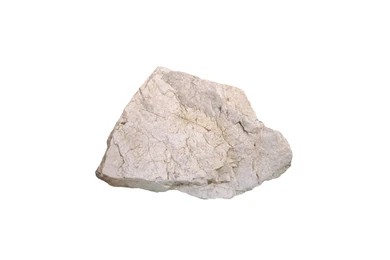
การเติมโดโลไมต์ลงในดินเหนียว – จะทำให้เกิดอะไรขึ้น?
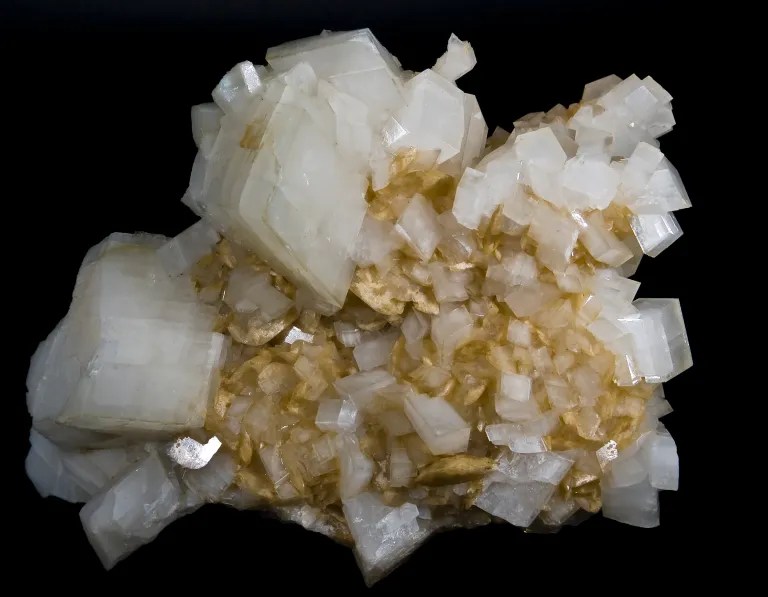
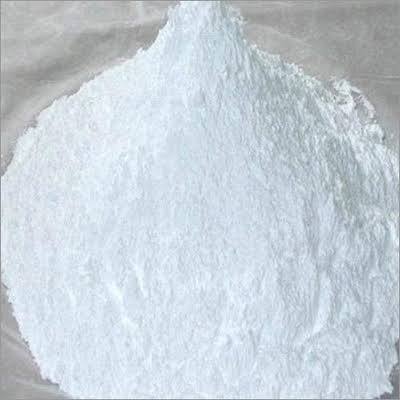
โดโลไมต์ เป็นแร่คาร์บอเนตที่ประกอบด้วยแคลเซียมแมกนีเซียมคาร์บอเนต มีลักษณะเป้นผลึกสีขาวครีม แล้วแต่เหล็กค้นพบ แต่หากนำมาบดและผ่านกระบวณการเคมีจะมีลักษณะเป็น ผงสีขาวอมเหลืองคล้ายแป้ง ใช้ในการผลิตเหล็กเซรามิกและการเกษตร
โดโลไมต์ ในงานเซรามิก หากนำมาผสมกับดิน
- เป็นตัวช่วยละลาย (Flux): ในการเผาที่อุณหภูมิสูง โดโลไมต์จะช่วยให้ส่วนผสมละลายตัวและผสานกันได้ดีขึ้น ป้องกันตำหนิ จากดินและเคลือบ
- เพิ่มความแข็งแรง: ช่วยให้ชิ้นงานหลังเผามีความแกร่งและทนทานมากขึ้น แร่ตัวนี้ช่วยให้ชิ้นงานมีความทนทานต่อการหักงอและการรับแรงอัดได้ดีขึ้นหลังผ่านการเผาที่อุณหภูมิเหมาะสม (มักเป็นช่วง 1100°C ขึ้นไป)
- ควบคุมการขยายตัวทางความร้อน: ช่วยลดปัญหาเคลือบราน เคลือบกระโดด โดยปรับการขยายตัวของเนื้อดินให้เหมาะสมกับเคลือบ
- ให้ผิวสัมผัสแบบด้าน : หากใช้ในปริมาณที่เหมาะสมในสุตรดิน และเผาแล้วนำมาชุบ เคลือบ จะช่วยให้ได้พื้นผิวที่เนียนด้านสวยงาม
- ปรับปรุงสี: ในดินบางชนิด โดโลไมต์อาจช่วยขับสีหรือเปลี่ยนโทนสีของเนื้อดินหลังเผาได้ ส่วนมากจะให้ความรู้สึกขาวขึ้น เนื้อละเอียด เมื่อจับคู่กับสารให้ความขาวๆอื่นๆเช่น เซอโตเนียม แบเรียม
- ลดอุณหภูมิการสุกตัว : โดโลไมต์ทำหน้าที่เป็น “ตัวช่วยละลายสมทบ ช่วยให้ดินเริ่มหลอมตัวและแข็งแรงได้ที่อุณหภูมิต่ำลงกว่าปกติ
- ควบคุมการหดตัว : ช่วยลดการหดตัวของชิ้นงานระหว่างการเผา ทำให้ขนาดของผลิตภัณฑ์มีความสม่ำเสมอและลดโอกาสการบิดเบี้ยว
- การประหยัดพลังงาน: เมื่อดินสุกตัวได้เร็วขึ้นในอุณหภูมิที่ต่ำลง โรงงานจึงสามารถลดระยะเวลาและเชื้อเพลิงในการเผาได้
แผ่นทดสอบ Test Tiles
- ปั้นแผ่นดินเหนียว 2 แผ่น: แผ่นหนึ่งไม่ผสมอะไรเลย อีกแผ่นผสมโดโลไมต์
5-10%เผาที่อุณหภูมิเดียวกัน (เช่น 1200°C) - สิ่งที่สังเกตได้: แผ่นที่ผสมโดโลไมต์จะดู สุก และแน่นกว่า รวมถึงเสียงเวลาเคาะจะดังกังวานกว่าครับ
โดโลไมต์ ทั่วไปมักใช้ในปริมาณน้อยในเนื้อดิน แต่จะใช้ในสัดส่วนที่มากกว่าในสูตรน้ำยาเคลือบ เพื่อดึงคุณสมบัติด้านผิวสัมผัสออกมาให้มากที่สุด แต่ด้วยคุณสมบัติที่ช่วยให้ดินและเคลือบหลายชนิดเข้ากันได้ดี และให้สีขาว จึงมีหลายโรงานที่นิยมใช้ในงานเช่นกัน
Read English version
Adding Dolomite to clay – what does it do?
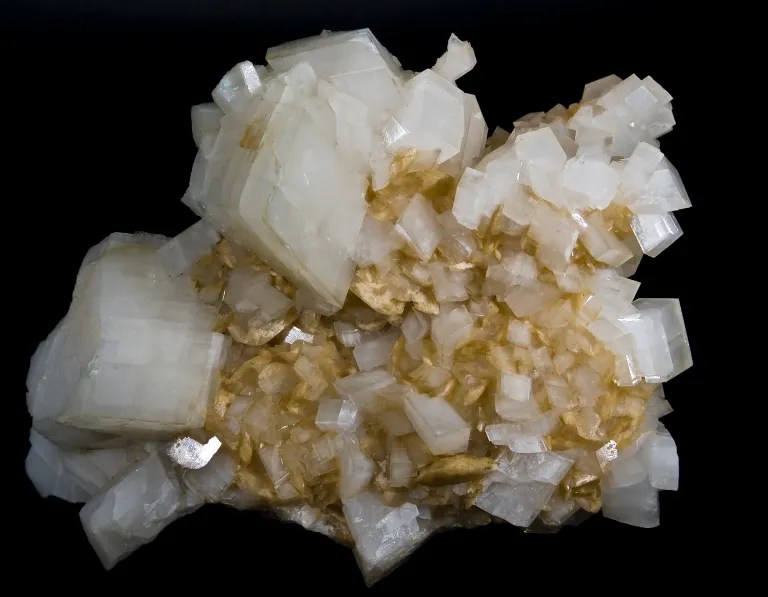
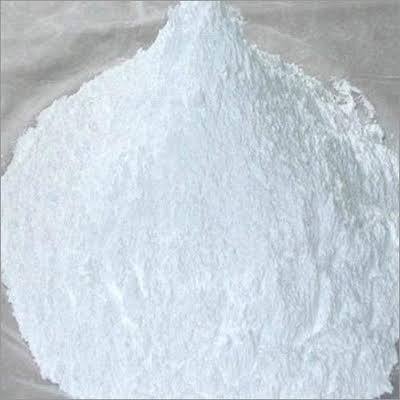
“Dolomite is an anhydrous carbonate mineral primarily consisting of calcium magnesium carbonate [CaMg(CO₃)₂]. In its natural state, it forms creamy-white crystals, though its hue can vary based on iron impurities. Following mechanical grinding and chemical processing, it is transformed into a fine, off-white to pale-yellow powder. This versatile mineral is essential in the metallurgical industry for steel manufacturing, as a flux in ceramics, and as a soil conditioner in agriculture.
Adding Dolomite to clay – what does it do?
- Acts as a Flux: During high-temperature firing, dolomite functions as a flux, promoting the melting and fusion of ingredients. This ensures a cohesive bond and prevents surface defects in both the clay body and the glaze.
- Enhances Structural Strength: It significantly improves the durability and hardness of the fired piece. When fired at optimal temperatures (typically 1100°C and above), dolomite increases the material’s resistance to bending (flexural strength) and compression.
- Controls Thermal Expansion: It stabilizes the clay’s thermal expansion to match the glaze, effectively reducing common issues such as crazing (fine cracks) or shivering (glaze flaking).
- Produces a Matte Finish: When integrated into the clay formula in the correct proportions, it contributes to a smooth, refined, and aesthetically pleasing matte texture after firing.
- Improves Color and Refinement: In many clay types, dolomite helps brighten the fired body, giving it a whiter and more delicate appearance. Its effect is further enhanced when used alongside opacifiers like Zirconium or Barium.
- Lowers Maturation Temperature: As a secondary flux, it accelerates the vitrification process, allowing the clay to reach its peak strength and density at a lower temperature than usual.
- Regulates Shrinkage: It helps control the rate of shrinkage during firing, ensuring dimensional consistency and minimizing the risk of warping or distortion.
- Energy Efficiency: By lowering the maturation point, dolomite enables faster firing cycles, which reduces overall fuel consumption and energy costs for manufacturers
“Ceramic Test Tiles for Color and Texture Verification”
Procedure:
- Prepare two test tiles:
- Control Tile: Pure clay with no additives.
- Dolomite Tile: Clay mixed with 5–10% dolomite.
- Firing: Fire both tiles simultaneously in the same kiln at the same temperature (e.g., 1200°C).In Clay Bodies: Generally, dolomite is used in small quantities as an additive to enhance the physical properties of the clay without compromising its workability.
In Glaze Recipes: It is typically used in higher concentrations within glaze formulas to fully bring out its unique textural qualities, particularly for creating specialized finishes.
Compatibility and Color: Due to its ability to improve the “glaze fit” (the bond between the clay and the glaze) and its contribution to a clean white finish, many ceramic factories favor dolomite as a key ingredient in their production lines.
 rorothailand.com
Leave a comment