
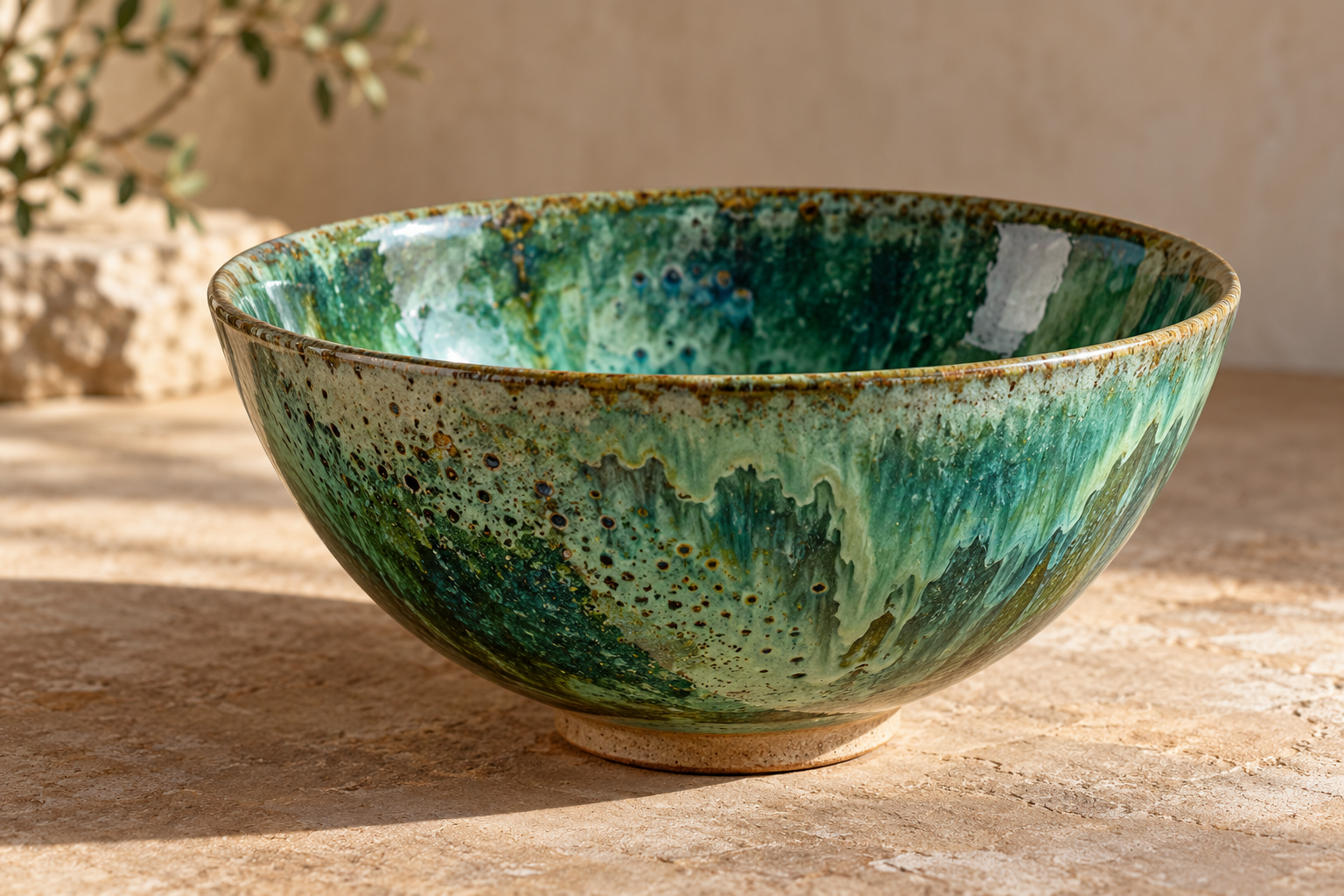
เคล็ดลับการทำเคลือบสีเขียวแบบ Reactive
-การทำเคลือบเขียวที่มีเอฟเฟกต์พื้นผิว (Reactive) คือ การทำให้เคลือบมีการไหลและไล่เฉดสี ไม่ใช่สีเรียบเพียงสีเดียว
-เคลือบสีเขียวแบบทำปฏิกิริยา เคลือบไฟต่ำ คือ เคลือบ ที่เหมาะแก่การเผา แบบไฟต่ำ 1,100-1,200


- ตัวให้สี (Colorants): ใช้ คอปเปอร์คาร์บอเนต (Copper Carbonate) เพื่อสีเขียวละมุน หรือ คอปเปอร์ออกไซด์ (Copper Oxide) เพื่อสีเขียวเข้ม/เขียวโลหะ
- สร้างการเคลื่อนไหว (Movement): เติมฟลักซ์ (Flux) เช่น แคลเซียม โบรอน โซดาแอสปาร์ เพื่อให้เคลือบเกิดการไหลซึมตามร่องดิน ทำให้เกิดมิติ
- ตัวช่วยสร้างลวดลาย (Opacifiers): แนะนำให้เติม รูไทล์ (Rutile) หรือ ไทเทเนียมไดออกไซด์ สเตนสี เพราะสารเหล่านี้จะทำให้เกิดริ้วลาย (Streaking) และการแยกชั้นของสีที่สวยงาม
- บรรยากาศในการเผา: แบ่งเป็นเทคนิค
– เตาไฟฟ้า (Oxidation): จะได้สีเขียวสดใส เขียวอมฟ้า
–เตาแก๊ส/ฟืน (Reduction): คอปเปอร์อาจเปลี่ยนเป็นสีแดง (Oxblood) หรือเขียวศิลาดล (Celadon) ขึ้นอยู่กับปริมาณออกซิเจน - สรุป เคล็ดลับในการทำเคลือบสีเขียวแบบทำปฏิกิริยา เคลือบไฟต่ำ คือ การเลือก สารตั้งต้น และ ออกไซด์ ที่เหมาะสม สามารถเลือกใช้ได้หลากหลาย และ การเลือกเติมสารให้สีอื่นๆเช่น สเตน ช่วยเพิ่มมิติ และความโดดเด่นในงาน


Read English version
Tips on Making Reactive Green Glazes
-Reactive green glazes create a textured surface effect, meaning the glaze flows and exhibits gradients, rather than being a single, flat color.
-Reactive green glazes are those suitable for low-fire firing at temperatures of 1,100-1,200°C.


Colorants: Use copper carbonate for a soft green color or copper oxide for a deep green/metallic green.
Movement: Add fluxes such as calcium, boron, or soda aspar to encourage glaze flow into the soil pores, creating dimension.
Opacifiers: Rutile or titanium dioxide stains are recommended as they create beautiful streaking and color layering.
Firing Atmosphere: Techniques vary:
– Electric kiln (Oxidation): Produces bright green and bluish-green colors.
– Gas/wood kiln (Reduction): Copper may turn red (Oxblood) or celadon green depending on the oxygen content.


Leave a Reply