
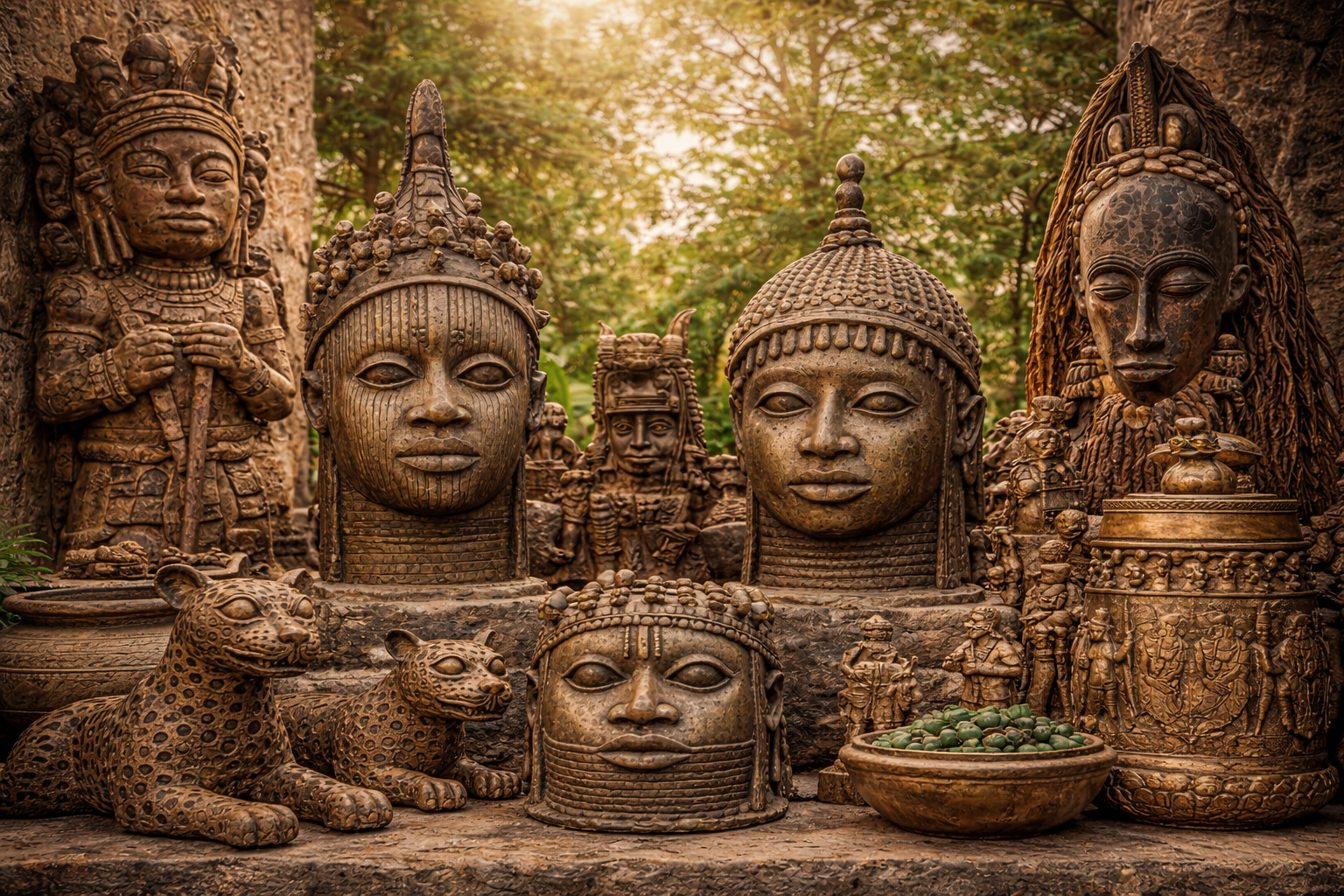
ศิลปะของแอฟริกาตอนใต้ทะเลทรายซาฮาราก่อน ค.ศ. 1500 เป็นหลักฐานสำคัญที่สะท้อนความหลากหลายทางวัฒนธรรม ความเชื่อ และโครงสร้างสังคมของชุมชนในภูมิภาคนี้ แม้ว่าหลายสังคมจะไม่มีระบบลายลักษณ์อักษร แต่ผลงานศิลปะกลับทำหน้าที่เป็นสื่อบันทึกประวัติศาสตร์ อัตลักษณ์ และความสัมพันธ์กับโลกเหนือธรรมชาติ
ภูมิภาค Sub-Saharan Africa ครอบคลุมพื้นที่กว้างใหญ่ ตั้งแต่แอฟริกาตะวันตก แอฟริกากลาง แอฟริกาตะวันออก จนถึงแอฟริกาใต้ ทำให้รูปแบบศิลปะมีความแตกต่างหลากหลาย ทั้งด้านวัสดุ เทคนิค และความหมายทางวัฒนธรรม
ลักษณะสำคัญของศิลปะ Sub-Saharan Africa
1. ศิลปะที่เชื่อมโยงกับพิธีกรรมและจิตวิญญาณ
ศิลปะในภูมิภาคนี้มักเกี่ยวข้องกับความเชื่อเรื่องบรรพบุรุษ วิญญาณ และพลังเหนือธรรมชาติ หน้ากาก (Masks) และประติมากรรมไม้ถูกใช้ในพิธีกรรมเพื่อสื่อสารกับโลกวิญญาณ หรือเพื่อแสดงบทบาทของผู้นำและผู้ประกอบพิธี
งานศิลป์จึงไม่ได้สร้างขึ้นเพื่อการประดับตกแต่งเท่านั้น แต่มีบทบาทเชิงสังคมและศาสนาอย่างชัดเจน
2. การใช้วัสดุธรรมชาติ
ศิลปินในแอฟริกายุคก่อน ค.ศ. 1500 ใช้วัสดุจากธรรมชาติเป็นหลัก เช่น
- ไม้
- งาช้าง
- ดินเผา
- โลหะ โดยเฉพาะทองแดงและบรอนซ์
แม้ว่าวัสดุอย่างไม้จะเสื่อมสภาพง่าย ทำให้เหลือหลักฐานไม่มากนัก แต่ผลงานที่ยังคงอยู่แสดงให้เห็นถึงความชำนาญทางเทคนิคที่สูงมาก
3. ความโดดเด่นด้านงานโลหะ
หนึ่งในความสำเร็จสำคัญคือการหล่อโลหะขั้นสูง เช่น
- Nok Culture (ไนจีเรีย) ที่มีประติมากรรมดินเผาอายุกว่า 2,000 ปี

- Ife และ Benin (ไนจีเรีย) ที่สร้างประติมากรรมบรอนซ์และทองแดงด้วยเทคนิค Lost-wax casting อย่างประณีต

ผลงานเหล่านี้สะท้อนความก้าวหน้าทางเทคโนโลยีและระบบช่างฝีมือที่เป็นระบบ
ศิลปะในฐานะเครื่องมือของอำนาจ
ในหลายอาณาจักร เช่น เบนิน (Benin Kingdom) งานศิลปะถูกใช้เพื่อแสดงอำนาจของกษัตริย์ (Oba) และชนชั้นปกครอง แผ่นบรอนซ์และประติมากรรมแสดงเหตุการณ์สำคัญทางประวัติศาสตร์ พิธีราชสำนัก และโครงสร้างสังคม
ศิลปะจึงเป็นทั้งสัญลักษณ์ของความศักดิ์สิทธิ์ และเครื่องมือสร้างความชอบธรรมทางการเมือง
ความหมายเชิงสุนทรียะ
แม้รูปแบบจะดูต่างจากมาตรฐานศิลปะยุโรปแบบคลาสสิก แต่ศิลปะแอฟริกาเน้น “การสื่อความหมาย” มากกว่าความสมจริงทางกายภาพ เช่น
- การขยายศีรษะให้ใหญ่กว่าสัดส่วนจริง เพื่อเน้นความสำคัญของสติปัญญาและอำนาจ
- รูปทรงที่เป็นนามธรรม เพื่อสื่อพลังทางจิตวิญญาณ
แนวคิดเหล่านี้สะท้อนระบบความคิดที่แตกต่างและลึกซึ้ง
ความสำคัญทางประวัติศาสตร์
ศิลปะ Sub-Saharan Africa ก่อน ค.ศ. 1500 แสดงให้เห็นว่า
- สังคมในภูมิภาคนี้มีระบบช่างฝีมือที่พัฒนาแล้ว
- มีโครงสร้างการปกครองและลำดับชนชั้นที่ชัดเจน
- มีความเชื่อและจักรวาลวิทยาที่ซับซ้อน
ผลงานเหล่านี้จึงเป็นหลักฐานสำคัญที่ยืนยันว่าแอฟริกามีอารยธรรมที่รุ่งเรืองและซับซ้อนก่อนการติดต่อกับยุโรป
บทสรุป
ศิลปะแอฟริกาตอนใต้ทะเลทรายซาฮาราก่อน ค.ศ. 1500 ไม่ใช่เพียงวัตถุโบราณ แต่เป็นระบบสัญลักษณ์ที่สะท้อนความเชื่อ อำนาจ และอัตลักษณ์ของชุมชน
ตั้งแต่หน้ากากพิธีกรรม ประติมากรรมไม้ ไปจนถึงบรอนซ์เบนินอันประณีต
ผลงานเหล่านี้แสดงถึงความคิดสร้างสรรค์และความลึกซึ้งทางวัฒนธรรมของทวีปแอฟริกาในยุคก่อนประวัติศาสตร์สมัยใหม่
Read English version
Sub-Saharan African Art before AD 1500

Sub-Saharan African Art before AD 1500
Art, Power, and Spiritual Identity in Pre-Modern Africa
Sub-Saharan African art before AD 1500 represents a rich and diverse artistic tradition that developed long before extensive contact with Europe. Spanning a vast region south of the Sahara Desert—from West and Central Africa to East and Southern Africa—these societies produced artworks that reflected complex belief systems, political authority, and social structures.
Although many of these cultures did not use written records, art functioned as a powerful visual language. Through sculpture, masks, metalwork, and textiles, communities expressed spiritual values, historical memory, and identity.
Art and Spiritual Belief
In many Sub-Saharan societies, art was deeply connected to religion and ritual practice. Sculptures and masks were not created solely for decoration; they played essential roles in ceremonies, initiation rites, and communication with ancestral spirits.
Masks, in particular, were used in performances that combined dance, music, and costume. These objects symbolized spiritual forces and were believed to hold transformative power during rituals.
Art was therefore functional, symbolic, and sacred.
Materials and Craftsmanship
Artists primarily used natural materials such as:
- Wood
- Terracotta
- Ivory
- Copper and bronze
Because wood decays over time, much of the surviving material consists of terracotta and metal objects. However, the technical sophistication of surviving works demonstrates highly developed craftsmanship.
One of the earliest known cultures, the Nok culture (present-day Nigeria, c. 1000 BCE–300 CE), produced expressive terracotta sculptures that show advanced artistic skill.
Later, the kingdoms of Ife and Benin became renowned for their bronze and brass castings, created using the lost-wax casting technique. These sculptures, often depicting rulers and court officials, reveal remarkable realism and technical mastery.
Art as Political Authority
In powerful kingdoms such as Benin, art was closely tied to royal authority. Bronze plaques and commemorative heads were used to record important events and legitimize the power of the king (Oba).
Art objects functioned as visual statements of hierarchy, leadership, and divine right. They reinforced social order and political structure.
Art as Political Authority
In powerful kingdoms such as Benin, art was closely tied to royal authority. Bronze plaques and commemorative heads were used to record important events and legitimize the power of the king (Oba).
Art objects functioned as visual statements of hierarchy, leadership, and divine right. They reinforced social order and political structure.
Aesthetic Principles
Sub-Saharan African art often emphasizes meaning over naturalistic proportion. For example:
- Enlarged heads symbolize wisdom and spiritual authority.
- Stylized forms express inner qualities rather than physical realism.
These artistic choices reflect philosophical and spiritual values rather than a desire to imitate nature exactly.
Cultural Significance
Sub-Saharan African art before AD 1500 demonstrates that:
- African societies possessed advanced technological and artistic knowledge.
- Complex political systems existed long before European influence.
- Art played a central role in organizing spiritual and social life.
These works challenge outdated assumptions and highlight the sophistication of pre-modern African civilizations.
Conclusion
Sub-Saharan African art before AD 1500 is not merely a collection of ancient objects. It is a record of spiritual belief, political authority, and cultural identity.
From terracotta figures of the Nok culture to the refined bronze castings of Benin, these artworks reveal the intellectual depth and creativity of African societies long before colonial contact.
They stand as enduring evidence of the richness and complexity of Africa’s early civilizations.
Leave a Reply