
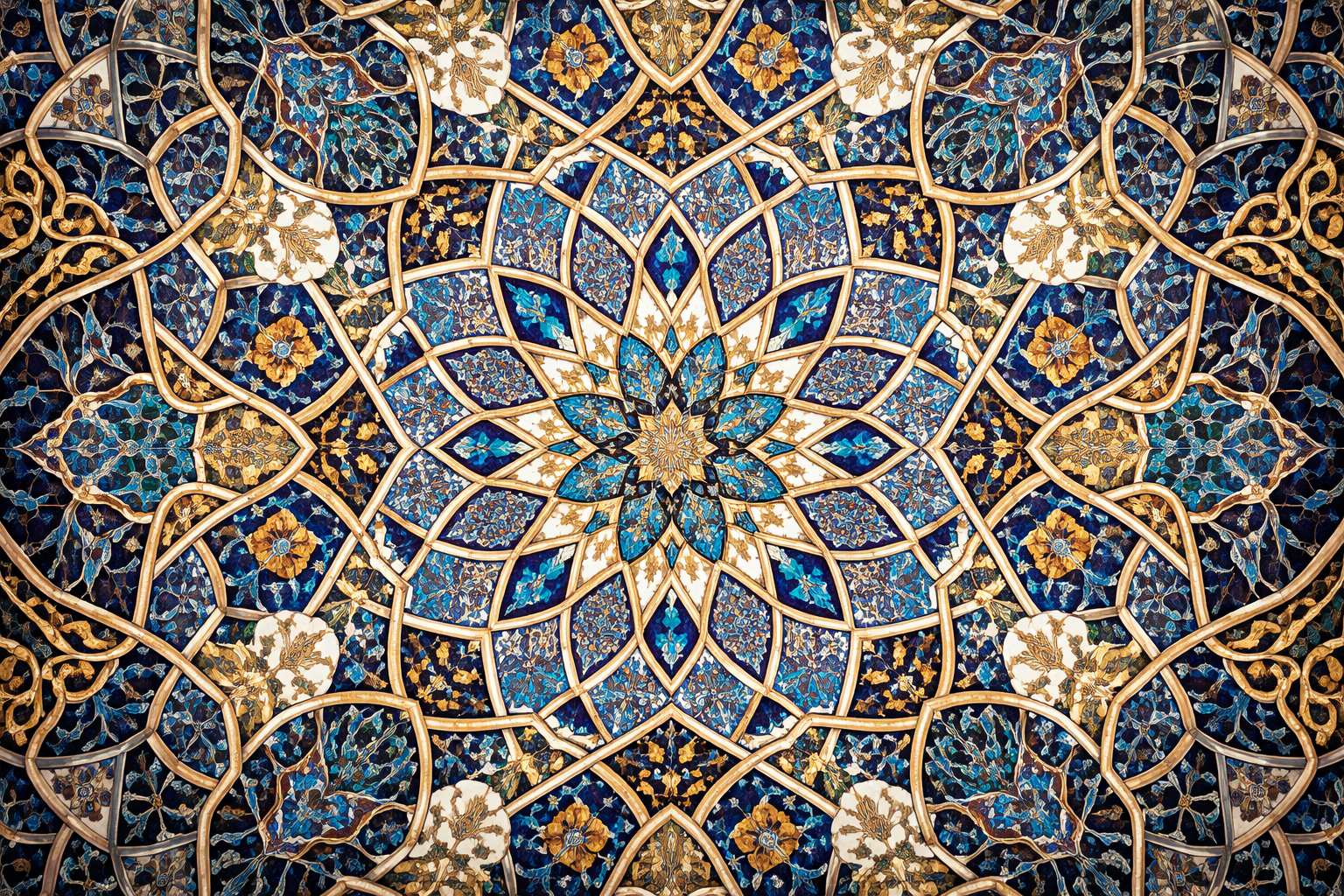
ศิลปะเรขาคณิตของโลกอิสลามเป็นหนึ่งในรูปแบบศิลปะที่โดดเด่นและมีเอกลักษณ์มากที่สุดในประวัติศาสตร์ศิลป์ ก่อนปี ค.ศ. 1700 ลวดลายเรขาคณิตได้กลายเป็นองค์ประกอบสำคัญในสถาปัตยกรรม งานตกแต่ง และศิลปะประยุกต์ในโลกอิสลาม ตั้งแต่ตะวันออกกลาง แอฟริกาเหนือ ไปจนถึงเอเชียกลางและสเปน
ลวดลายเหล่านี้ไม่เพียงแต่สร้างความงดงามทางสายตา แต่ยังสะท้อนแนวคิดทางศาสนา ปรัชญา และคณิตศาสตร์ที่ลึกซึ้ง
แนวคิดเบื้องหลังศิลปะเรขาคณิตอิสลาม
ในศิลปะอิสลาม มีการหลีกเลี่ยงการสร้างภาพมนุษย์หรือสัตว์ในบริบททางศาสนา โดยเฉพาะในมัสยิด ด้วยเหตุนี้ ศิลปินจึงพัฒนารูปแบบการตกแต่งที่ใช้ รูปทรงเรขาคณิต ลวดลายซ้ำ และสมมาตร เพื่อสร้างความงดงาม
ลวดลายเหล่านี้สะท้อนแนวคิดเรื่อง
- ความเป็นระเบียบของจักรวาล
- ความไม่มีที่สิ้นสุดของพระเจ้า
- ความสมดุลและความกลมกลืนของธรรมชาติ
การใช้รูปทรงพื้นฐาน เช่น วงกลม สี่เหลี่ยม และดาวหลายแฉก สามารถสร้างเป็นลวดลายที่ซับซ้อนและต่อเนื่องได้อย่างไม่รู้จบ
รูปแบบลวดลายที่สำคัญ
ศิลปะเรขาคณิตอิสลามมักประกอบด้วยองค์ประกอบหลักดังนี้
1. รูปทรงเรขาคณิตซ้ำ (Geometric Patterns)

ลวดลายถูกสร้างจากการแบ่งวงกลมและการเชื่อมต่อเส้นตรง ทำให้เกิดรูปทรง เช่น
- ดาวแปดแฉก
- รูปหลายเหลี่ยม
- รูปดาวที่เชื่อมต่อกันเป็นโครงข่าย
ลวดลายเหล่านี้สามารถขยายต่อไปได้อย่างไม่สิ้นสุด
2. Arabesque

ลวดลายเส้นโค้งที่คล้ายเถาวัลย์หรือพืช มักผสมผสานกับรูปทรงเรขาคณิต ทำให้เกิดความรู้สึกเคลื่อนไหวและมีชีวิตชีวา
3. Calligraphy

ตัวอักษรภาษาอาหรับ โดยเฉพาะข้อความจากคัมภีร์กุรอาน มักถูกนำมาใช้เป็นองค์ประกอบตกแต่งร่วมกับลวดลายเรขาคณิต
การใช้ในสถาปัตยกรรม
ศิลปะเรขาคณิตถูกใช้ตกแต่งพื้นผิวของอาคาร เช่น
- ผนังมัสยิด
- โดม
- หน้าต่าง
- พื้นกระเบื้อง
ตัวอย่างสถาปัตยกรรมที่มีลวดลายเรขาคณิตโดดเด่น ได้แก่
- Alhambra Palace (สเปน)
- Great Mosque of Isfahan (อิหร่าน)
- Blue Mosque (ตุรกี)
ลวดลายเหล่านี้ทำให้อาคารมีความงดงามและสะท้อนความรู้ด้านคณิตศาสตร์และการออกแบบขั้นสูง
เทคนิคและวัสดุ
ศิลปินในโลกอิสลามใช้วัสดุหลากหลายในการสร้างลวดลายเรขาคณิต เช่น
- กระเบื้องเซรามิกเคลือบ
- งานแกะสลักหิน
- งานไม้
- ปูนปั้น (stucco)
- งานโลหะ
เทคนิคการตัดกระเบื้องและการจัดเรียงลวดลายต้องใช้ความแม่นยำสูง เพราะรูปทรงทุกชิ้นต้องต่อกันอย่างพอดี
ความสำคัญทางวัฒนธรรม
ศิลปะเรขาคณิตในโลกอิสลามแสดงให้เห็นว่า
- คณิตศาสตร์และศิลปะสามารถผสานกันได้อย่างงดงาม
- การออกแบบสามารถสะท้อนความเชื่อทางศาสนาได้
- ความงามสามารถเกิดจากรูปแบบที่เป็นนามธรรม ไม่จำเป็นต้องเลียนแบบธรรมชาติ
ศิลปะแบบนี้ยังมีอิทธิพลต่อการออกแบบในยุคปัจจุบัน ทั้งในงานสถาปัตยกรรม กราฟิกดีไซน์ และศิลปะร่วมสมัย
บทสรุป
Islamic Geometric Art before 1700 เป็นตัวอย่างที่ชัดเจนของการผสมผสานระหว่างศิลปะ คณิตศาสตร์ และศาสนา ลวดลายที่ซับซ้อนและต่อเนื่องไม่รู้จบสะท้อนแนวคิดเกี่ยวกับความเป็นนิรันดร์และความสมดุลของจักรวาล
จากกระเบื้องโมเสกในมัสยิด ไปจนถึงลวดลายบนพระราชวัง ศิลปะเรขาคณิตของโลกอิสลามยังคงเป็นหนึ่งในมรดกทางวัฒนธรรมที่ทรงอิทธิพลที่สุดในประวัติศาสตร์ศิลป์
Read English version
Islamic Geometric Art (before 1700)

Islamic geometric art is one of the most distinctive artistic traditions in world history. Before the year 1700, geometric patterns became a major element in architecture, decoration, and applied arts across the Islamic world, including the Middle East, North Africa, Central Asia, and parts of Spain.
These patterns were not created only for beauty. They also reflected deep connections between religion, mathematics, and philosophy.
The Concept Behind Islamic Geometric Art
In many religious contexts within Islamic culture, artists traditionally avoided depicting humans and animals, especially in mosques. Because of this, artists developed decorative systems based on geometry, symmetry, and repetition.
These patterns symbolized several important ideas:
- The order of the universe
- The infinite nature of God
- Balance and harmony in creation
Simple shapes such as circles, squares, and stars were carefully combined to form highly complex patterns that could theoretically extend infinitely.
Common Types of Patterns
Islamic geometric art usually includes several important visual elements.
Geometric patterns are created by dividing circles and connecting lines to form shapes such as stars, polygons, and repeating grids.
Arabesque designs include flowing, plant-like patterns that intertwine with geometric structures, creating a sense of movement and rhythm.
Calligraphy is another key element. Arabic script, often featuring verses from the Qur’an, is frequently integrated into decorative designs.
Use in Architecture
Geometric patterns were widely used in architectural decoration, including:
- mosque walls
- domes
- windows
- tiled floors
Some famous examples include:
- The Alhambra Palace in Spain
- The Great Mosque of Isfahan in Iran
- The Blue Mosque in Turkey
These buildings demonstrate the advanced understanding of geometry and design developed by Islamic artists.
Materials and Techniques
Artists used many materials to create geometric decoration, such as:
- glazed ceramic tiles
- carved stone
- wood
- stucco plaster
- metalwork
Creating these patterns required extreme precision because each shape had to connect perfectly with the others.
Cultural Importance
Islamic geometric art shows that art and mathematics can work together beautifully. It also demonstrates how abstract design can express spiritual ideas without depicting living figures.
Even today, these geometric patterns continue to influence modern architecture, graphic design, and contemporary art.
Conclusion
Islamic geometric art before 1700 represents a remarkable blend of art, mathematics, and spirituality. The repeating patterns symbolize infinity and harmony, reflecting the philosophical ideas of the Islamic world.
From mosque decorations to palace walls, these designs remain one of the most influential artistic traditions in global history.
Leave a Reply