
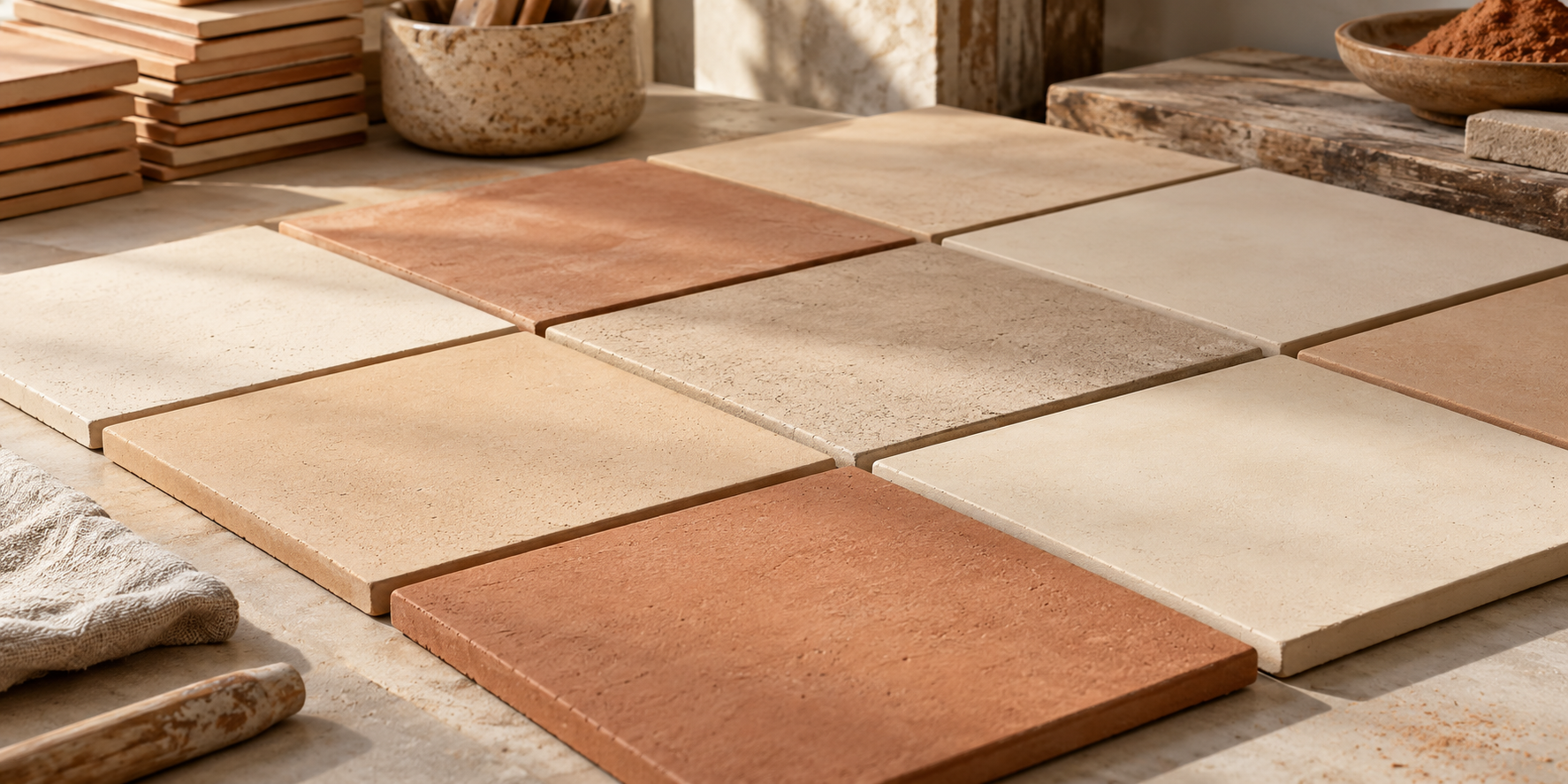
เคล็ดลับการผลิตกระเบื้องแบบแผ่นไม่ให้งอและแตกหัก การผลิตกระเบื้องให้มีผิวหน้าเรียบสม่ำเสมอ แข็งแรง และไม่แตกง่าย มีหัวใจสำคัญอยู่ที่ความแม่นยำในทุกขั้นตอน ตั้งแต่การผสมวัตถุดิบจนถึงการควบคุมอุณหภูมิในเตาเผา
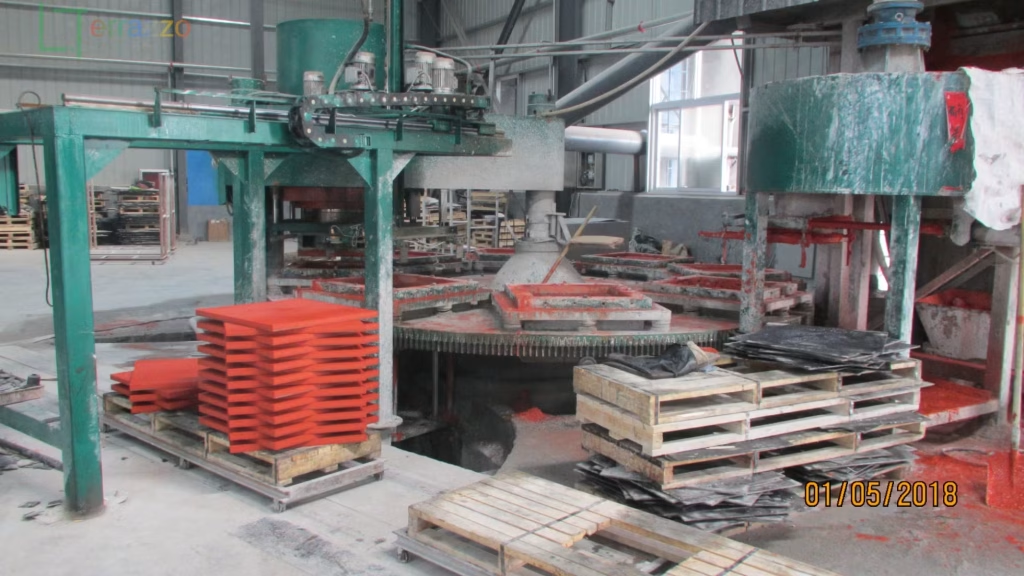
วิธีการผลิตเพื่อให้กระเบื้องเรียบ
- การควบคุมการอบแห้ง (Drying Control): การระเหยของความชื้นที่ไม่เท่ากันเป็นสาเหตุหลักที่ทำให้กระเบื้องงอ ควรใช้ระบบการอบแห้งที่กระจายความร้อนอย่างสม่ำเสมอทั้งด้านหน้าและด้านหลังแผ่น
- แรงกดมหาศาลสม่ำเสมอ (Uniform Pressing): การใช้เครื่องอัดไฮดรอลิกกำลังสูงต้องให้แรงกดที่กระจายตัวทั่วทั้งแผ่นอย่างเท่ากัน เพื่อให้เนื้อกระเบื้องมีความหนาแน่นสม่ำเสมอ ซึ่งจะช่วยลดการบิดตัวขณะเผา
- เตาเผาแบบลูกกลิ้งยาว (Extra-long Roller Kilns): กระเบื้องที่ผ่านเตาเผาชนิดนี้จะถูกเคลื่อนที่ในระนาบเดียวตลอดเวลา และต้องควบคุมอุณหภูมิให้คงที่
(ประมาณ 1200-1250°C) เพื่อให้เกิดกระบวนการ เผาที่สมบูรณ์โดยไม่มีการบิดงอ - การขัดหน้าและตัดขอบ (Polishing & Squaring): หลังการเผา มักใช้เครื่องขัดผิวหน้าเพื่อปรับระนาบให้เรียบสนิท (Planarity) และตัดขอบให้ได้ฉากแม่นยำเพื่อให้ปูได้ชิดโดยไม่มีรอยต่อที่สะดุด

วิธีการผลิตเพื่อให้กระเบื้องแข็งแรง
- สูตรผสมวัตถุดิบที่เหมาะสม:
- ดินดำ Ball Clay: ช่วยเพิ่มความเหนียว ทำให้กระเบื้องขึ้นรูปง่ายและไม่แตกหักในช่วงก่อนเผา
- ควอตซ์ Quartz: เพิ่มความแข็งและความทนทานต่อการขีดข่วน
- เฟสสปาร์ Feldspar: ทำหน้าที่เป็นตัวช่วยหลอมละลาย (Flux) ช่วยให้วัสดุเกาะตัวแน่นเป็นเนื้อเดียวกันหลังเผา
- การใช้สารเพิ่มความแข็งแรง (Additives): สำหรับกระเบื้องขนาดใหญ่หรือแผ่นบาง การเติมสาร Conditioner หรือ สารกลุ่ม Plasticizer จะช่วยลดอัตราการแตกร้าวในสายการผลิตได้ดี
- การขจัดการสะสมความเครียด (Internal Stress): การใช้วัตถุดิบที่มีอนุภาคละเอียด (ผ่านการบดใน Ball Mill และการร่อนผ่านตะแกรงพิเศษ) ให้เป็นเม็ดเล็กสม่ำเสมอ จะช่วยให้เนื้อในกระเบื้องยึดเกาะกันแน่น ลดช่องว่างอากาศที่เป็นจุดบอดทำให้กระเบื้องแตก

เคล็ดลับการเผา (Firing Strategy)
- Slow Ramp & Hold: ควรปรับเพิ่มอุณหภูมิอย่างช้า ๆ (Slow Ramp) เพื่อให้ความร้อนกระจายถึงใจกลางแผ่นพร้อม ๆ กับขอบ และควรมีช่วงแช่อุณหภูมิ (Hold) เพื่อให้กระบวนการทางเคมี (Vitrification) เกิดขึ้นอย่างสมบูรณ์ทั่วทั้งแผ่น
- การวางในเตา: หลีกเลี่ยงการวางกระเบื้องใกล้ขอบเตามากเกินไป เพราะอุณหภูมิอาจไม่นิ่งเท่าตรงกลาง
- อุณหภูมิที่เหมาะสม: การเผาที่อุณหภูมิสูงเกินไปจะทำให้เกิดการหลอมละลายมากเกิน (Over-firing) ซึ่งนำไปสู่การเสียรูปหรือการโก่งตัวแบบ Convexity


สรุป
การผลิตกระเบื้องให้เรียบและแข็งแรงต้องใส่ใจทั้งส่วนผสม การขึ้นรูป การอบแห้ง และการเผา โดยเลือกวิธีและเงื่อนไขให้เหมาะกับวัสดุและกระบวนการผลิต
Read English version
Tips for Making Flat, Strong Floor Tiles The production of tiles with a smooth, uniform, strong, and break-resistant surface hinges on key aspects ranging from raw material inspection to quality control.
Manufacturing Methods for Achieving Flat Tiles:
Drying Control: Uneven moisture evaporation is a major cause of tile warping. A drying system should be used that distributes heat evenly to both the front and back of the tile.
Uniform Pressing: A high-powered hydraulic press must be used to apply even pressure across the entire tile. This ensures uniform tile density, reducing warping during firing.
Extra-long Roller Kilns: Tiles fired in this type of kiln are moved in a single plane at all times, and the temperature must be kept constant (approximately 1200-1250°C) to ensure a complete firing process without warping.
Surface finishing and edge cutting: After firing, the tile surface may be polished and the edges cut square.
Manufacturing Methods for Strong Tiles
Appropriate Raw Material Formulas:
Ball Clay: Increases plasticity (making tiles easier to shape and preventing breakage before firing).
Quartz: Increases hardness and scratch resistance.
Feldspar: Acts as a flux, helping the material to bond tightly together after firing.
Use of Additives: For large or thin tiles, adding conditioners or plasticizers can significantly reduce cracking during production.
Eliminating Internal Stress: Using finely particleized materials (ground in a ball mill and sieved through a special mesh to create uniformly small granules) helps to tightly bond the tile’s internal structure, reducing air gaps that cause tile breakage.
Firing Strategy Tips:
Slow Ramp & Hold: Increase the temperature slowly (slow ramp) to allow heat to distribute evenly to the center of the tile, as well as the edges. A temperature hold period (hold) is necessary to allow the vitrification process to fully occur throughout the tile.
Placement in the Kiln: Avoid placing tiles too close to the edges of the kiln, as the temperature may not be as stable as in the center.
Optimal Temperature: Firing at excessively high temperatures will cause over-firing, leading to deformation or convexity.
Leave a Reply