
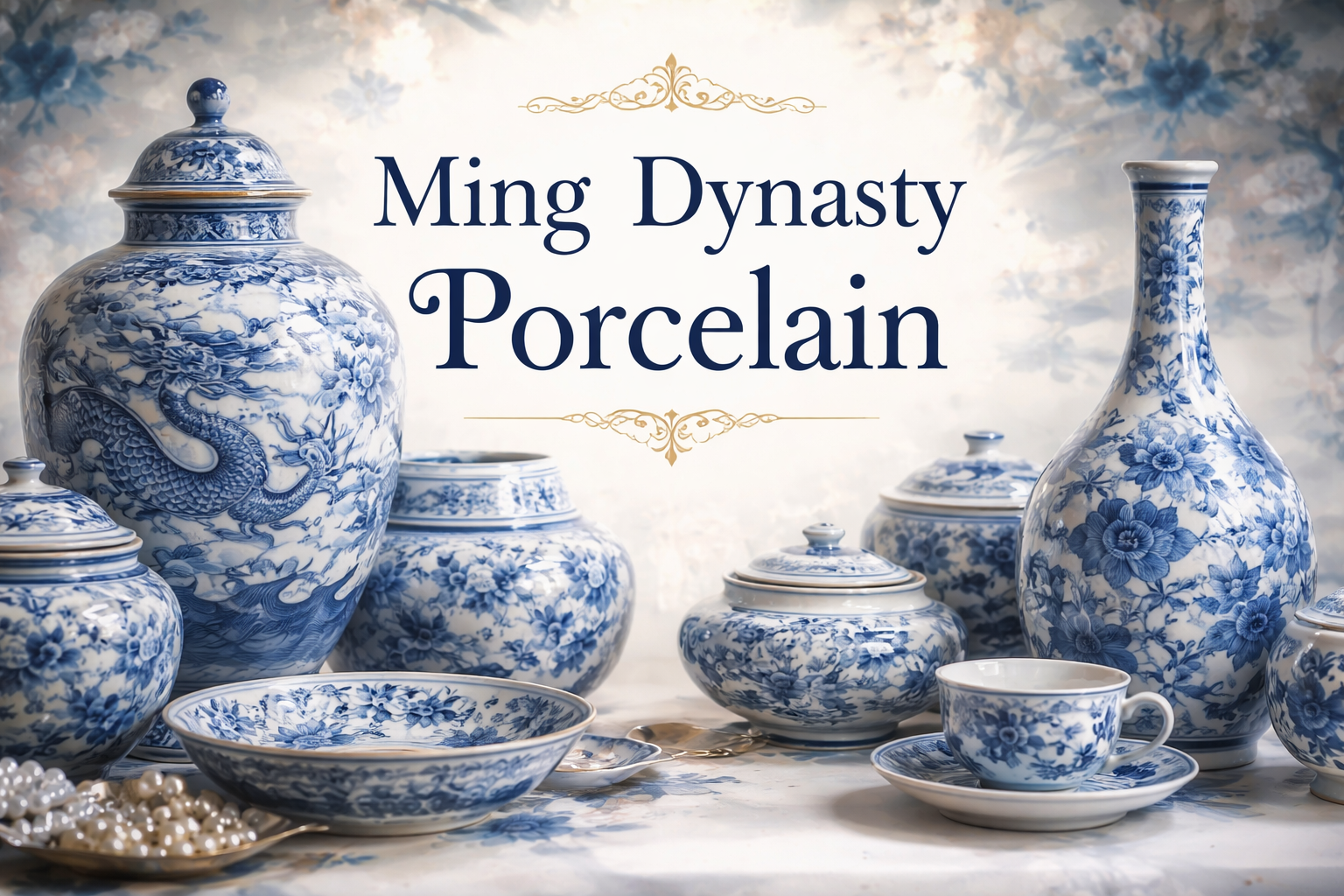
เครื่องลายครามในสมัย ราชวงศ์หมิง (ค.ศ. 1368–1644) ถือเป็นหนึ่งในช่วงเวลาที่รุ่งเรืองที่สุดของศิลปะเซรามิกจีน และเป็นยุคที่ “เครื่องลายคราม” ได้รับการพัฒนาอย่างสมบูรณ์ทั้งด้านเทคนิคและความงาม
ศูนย์กลางการผลิตที่สำคัญคือเมือง จิ่งเต๋อเจิ้น (Jingdezhen) ซึ่งกลายเป็นแหล่งผลิตเครื่องลายครามระดับจักรวรรดิ และมีการส่งออกไปทั่วโลก
ลักษณะเด่นของเครื่องลายครามหมิง
เครื่องลายครามในยุคหมิงมีเอกลักษณ์ที่ชัดเจน โดยเฉพาะ
- เนื้อพอร์ซเลนสีขาวบริสุทธิ์ (White Porcelain Body)
- การเคลือบใสและเรียบเนียน
- ลวดลายที่ละเอียดและสมดุล
- การใช้สีที่คมชัด โดยเฉพาะ “สีน้ำเงินโคบอลต์”
รูปแบบที่มีชื่อเสียงที่สุดคือ
Blue-and-White Porcelain (เครื่องลายครามสีน้ำเงิน-ขาว)
เทคนิคการผลิต
ศิลปินจะวาดลวดลายด้วยสีโคบอลต์ลงบนเนื้อดินสีขาว ก่อนนำไปเคลือบและเผาที่อุณหภูมิสูง
ผลลัพธ์คือ:
- ลวดลายฝังอยู่ใต้เคลือบ (underglaze)
- สีไม่ซีดจาง
- พื้นผิวเรียบและเงางาม
เทคนิคนี้ทำให้เครื่องลายครามหมิงมีทั้งความสวยงามและความทนทานสูง
ลวดลายและความหมาย
ลวดลายบนเครื่องลายครามหมิงไม่ได้มีเพียงความสวยงาม แต่ยังสื่อถึงความเชื่อและวัฒนธรรม เช่น
- มังกร → อำนาจและจักรพรรดิ
- ดอกโบตั๋น → ความมั่งคั่ง
- เมฆและคลื่น → ธรรมชาติและจักรวาล
- ฉากเรื่องราว → ตำนานและวรรณกรรมจีน
ความสำคัญทางประวัติศาสตร์
เครื่องลายครามหมิงเป็นสินค้าส่งออกสำคัญไปยัง
- เอเชียตะวันออกเฉียงใต้
- ตะวันออกกลาง
- ยุโรป
และมีอิทธิพลต่อศิลปะเซรามิกทั่วโลก โดยเฉพาะในยุโรปที่พยายามพัฒนาเทคนิคพอร์ซเลนตามแบบจีน
บทสรุป
เครื่องลายครามราชวงศ์หมิงไม่ใช่เพียงภาชนะ แต่เป็นงานศิลปะที่สะท้อน
ทั้งเทคโนโลยี ความเชื่อ และรสนิยมของยุคสมัย
ความสมดุลระหว่าง “รูปทรง สี และลวดลาย” ทำให้ผลงานในยุคนี้ยังคงเป็นมาตรฐานของความงามในงานเซรามิกจนถึงปัจจุบัน
Read English version
Ming Dynasty Porcelain

Ming Dynasty porcelain (1368–1644) represents one of the most significant periods in the history of Chinese ceramics. During this time, porcelain production reached a high level of technical perfection and artistic refinement.
The main production center was Jingdezhen, which became the imperial kiln site and a global hub for porcelain manufacturing and export.
Key Characteristics
Ming porcelain is widely recognized for:
Pure white porcelain body
Smooth and transparent glaze
Balanced and detailed decoration
Strong use of cobalt blue pigment
The most iconic style is
Blue-and-White Porcelain
Production Technique
Artists painted designs using cobalt blue on the white clay body before applying glaze and firing at high temperatures.
This resulted in:
Underglaze decoration
Durable and long-lasting color
Smooth, glossy surface
This technique contributed to both the beauty and durability of Ming porcelain.
Motifs and Symbolism
The decorative patterns were highly symbolic, often representing cultural beliefs:
Dragons → power and imperial authority
Peonies → wealth and prosperity
Clouds and waves → nature and cosmic balance
Narrative scenes → literature and mythology
Historical Importance
Ming porcelain became a major export product, reaching:
Southeast Asia
The Middle East
Europe
It greatly influenced global ceramic traditions, especially in Europe, where artisans attempted to replicate Chinese porcelain techniques.
Conclusion
Ming Dynasty porcelain is more than functional ware—it is a reflection of cultural identity, technological advancement, and artistic excellence.
Its harmony of form, color, and decoration continues to define standards of beauty in ceramics today.
Leave a Reply