
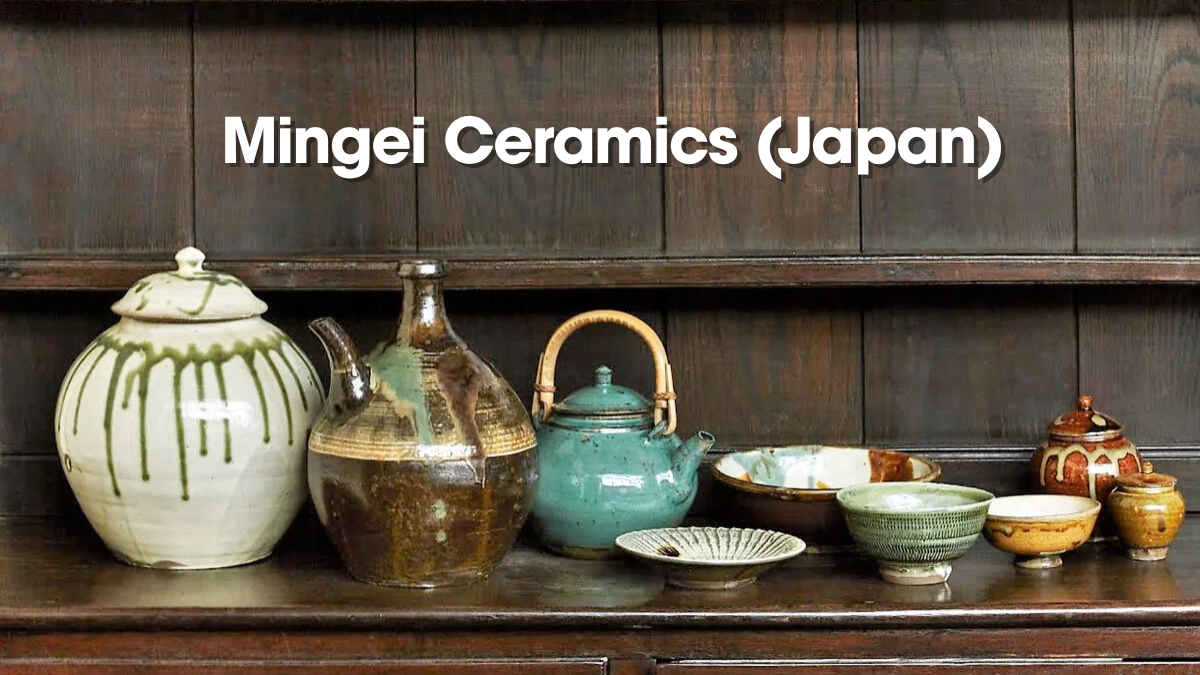
เซรามิกมินเกไม่ใช่เพียงรูปแบบของงานเครื่องปั้นดินเผา แต่เป็นแนวคิดและปรัชญาที่สะท้อนความเรียบง่าย ความถ่อมตน และการใช้ชีวิตในทุกวัน คำว่า Mingei (民藝) หรือ “ศิลปะของผู้คน” ถูกนิยามขึ้นโดย Yanagi Sōetsu ในช่วงต้นศตวรรษที่ 20
แนวคิดนี้หมายถึงวัตถุที่ทำด้วยมือโดยช่างฝีมือทั่วไป เพื่อการใช้งานจริงในชีวิตประจำวัน ไม่ใช่เพื่อการจัดแสดงหรือชื่อเสียง

แนวคิดและปรัชญาของ Mingei
หัวใจของ Mingei คือความเชื่อว่าความงามที่แท้จริงไม่ได้เกิดจากการปรุงแต่ง แต่เกิดจากการสร้างสิ่งของด้วยความตั้งใจ ความซื่อสัตย์ และการใช้งานจริง
Mingei ปฏิเสธแนวคิดที่เน้นความหรูหราและความโดดเด่นของศิลปิน แต่ให้ความสำคัญกับ:
- ความเรียบง่าย มากกว่าความซับซ้อน
- การใช้งานจริง มากกว่าการตกแต่ง
- ความถ่อมตน มากกว่าชื่อเสียง
- ประเพณี มากกว่าแฟชั่น
แนวคิดนี้ยังเชื่อมโยงกับ วาบิ-ซาบิ ซึ่งมองเห็นความงามในความไม่สมบูรณ์ ความไม่ถาวร และร่องรอยของกาลเวลา
ประวัติความเป็นมา
แนวคิดมินเกเกิดขึ้นในช่วงปี 1920 เพื่อตอบโต้การเติบโตของอุตสาหกรรมและการผลิตจำนวนมาก ซึ่งทำให้งานฝีมือดั้งเดิมลดคุณค่า
Yanagi Sōetsu พร้อมด้วยบุคคลสำคัญ เช่น Hamada Shōji และ Bernard Leach ได้ร่วมกันฟื้นฟูและส่งเสริมงานหัตถกรรมพื้นบ้าน
พวกเขาสนับสนุนการใช้วัสดุท้องถิ่น เทคนิคดั้งเดิม และอัตลักษณ์ของแต่ละภูมิภาค รวมถึงก่อตั้ง Japan Folk Crafts Museum เพื่อแสดงคุณค่าของงานหัตถกรรมในชีวิตประจำวัน
ลักษณะของเซรามิกมินเก

1. เน้นการใช้งานจริง
ทุกชิ้นถูกออกแบบมาเพื่อใช้ในชีวิตประจำวัน เช่น ชาม จาน และถ้วย
2. วัสดุธรรมชาติ
ใช้ดินท้องถิ่นและเคลือบธรรมชาติ เช่น เถ้าไม้หรือแร่ธาตุ
3. ความงามจากความไม่สมบูรณ์แบบ
รูปทรงไม่เท่ากัน ขอบไม่เรียบ หรือเคลือบไม่สม่ำเสมอ กลายเป็นเอกลักษณ์เฉพาะตัว
4. ดีไซน์เรียบง่าย
ไม่เน้นลวดลายหรือการตกแต่งมากเกินไป
5. ไม่เน้นตัวตนศิลปิน
ให้ความสำคัญกับผลงานมากกว่าผู้สร้าง
ความสำคัญทางวัฒนธรรม
Mingei สะท้อนวิถีชีวิตที่เชื่อมโยงกับความเรียบง่าย ความจริงใจ และความสัมพันธ์ระหว่างมนุษย์กับวัตถุ
ในวัฒนธรรมญี่ปุ่น สิ่งของในชีวิตประจำวันไม่ได้เป็นเพียงของใช้ แต่เป็นส่วนหนึ่งของพิธีกรรมเล็ก ๆ ในชีวิต เช่น การกินอาหารหรือดื่มชา
เซรามิกมินเกจึงไม่ใช่แค่ภาชนะ แต่เป็นสิ่งที่ช่วยสร้างประสบการณ์และความรู้สึกในแต่ละวัน
อิทธิพลในยุคปัจจุบัน
ในปัจจุบัน แนวคิดมินเกยังคงมีอิทธิพลอย่างมาก โดยเฉพาะในกระแส:
- งานทำมือ (Handmade Movement)
- การผลิตอย่างยั่งยืน (Sustainability)
- การใช้ชีวิตแบบ Slow Living
- การออกแบบมินิมอล
แบรนด์เซรามิกยุคใหม่จำนวนมากนำแนวคิดมินเกมาปรับใช้ เพื่อสร้างสินค้าที่มีทั้งความร่วมสมัยและความเป็นธรรมชาติ
สรุป
เซรามิกมินเกไม่ใช่เพียงของใช้ แต่เป็นปรัชญาที่สอนให้เราเห็นคุณค่าของความเรียบง่าย ความไม่สมบูรณ์แบบ และความงามในชีวิตประจำวัน
Read English version
Mingei Ceramics (Japan): The Beauty of Everyday Life

Mingei ceramics represent more than just a style of pottery—they embody a philosophy rooted in simplicity, humility, and everyday living. The term Mingei (民藝), meaning “the art of the people,” was introduced by Yanagi Sōetsu in the early 20th century. It refers to handcrafted objects made by ordinary artisans for daily use, rather than for display or prestige.
At its core, Mingei challenges the conventional idea of art by shifting the focus away from individual artists and toward collective craftsmanship, tradition, and function.
Philosophical Foundation of Mingei
The philosophy of Mingei is deeply connected to Japanese cultural values and spiritual aesthetics. It emphasizes that true beauty is not something artificially created but something that emerges naturally when an object is made with sincerity and purpose.
One of the central ideas behind Mingei is the rejection of excessive decoration and ego-driven creation. Instead, it promotes:
- Simplicity over complexity
- Function over decoration
- Humility over recognition
- Tradition over innovation driven by trends
Mingei is closely related to the concept of wabi-sabi, which appreciates imperfection, impermanence, and natural aging. In this sense, a slightly uneven bowl or a glaze with irregular patterns is not considered flawed—it is seen as more authentic and alive.
Historical Development
The Mingei movement began in the 1920s as a reaction to rapid industrialization in Japan. As mass production increased, handmade crafts began to decline in both value and presence.
Yanagi Sōetsu, along with key figures such as Hamada Shōji and Bernard Leach, sought to preserve traditional craftsmanship. They believed that industrial goods lacked the warmth, individuality, and cultural depth found in handmade objects.
To support this vision, they promoted regional crafts and encouraged the use of local materials and techniques. The establishment of the Japan Folk Crafts Museum further reinforced the idea that everyday objects could hold artistic and cultural significance.
Characteristics of Mingei Ceramics
Mingei ceramics are defined by a set of distinct yet subtle characteristics that reflect their philosophy:
1. Functionality First
Every piece is designed with practical use in mind. Bowls, plates, and cups are created to be used daily, not displayed as decorative objects.
2. Natural Materials and Processes
Mingei ceramics often use locally sourced clay and natural glazes such as ash or iron-based finishes. The firing process may involve traditional kilns, resulting in organic variations.
3. Imperfection as Beauty
Irregular shapes, uneven edges, and spontaneous glaze patterns are embraced. These imperfections reflect the human touch and make each piece unique.
4. Simplicity in Design
Decoration is minimal or absent. Instead, beauty is found in proportion, texture, and form.
5. Anonymous Craftsmanship
Unlike modern art, where the artist’s identity is emphasized, Mingei values anonymity. The focus is on the object itself rather than its creator.
Cultural and Social Significance
Mingei is not only about objects but also about values. It reflects a way of life that prioritizes authenticity, community, and connection to tradition.
In Japanese culture, everyday objects are not seen as separate from life—they are an integral part of it. A ceramic bowl is not just a container; it is part of a daily ritual, whether it is serving rice, tea, or shared meals.
Mingei also represents resistance to consumerism. In contrast to disposable, mass-produced goods, Mingei ceramics are made to last, to age gracefully, and to develop character over time.
Influence on Modern Ceramics and Design
Today, the influence of Mingei can be seen across global design and ceramic practices. Many contemporary ceramic artists and brands draw inspiration from its principles, particularly in the context of:
- Handmade and artisan movements
- Sustainable and slow production
- Minimalist and natural aesthetics
- Emotional connection between user and object
In modern dining culture, Mingei-inspired ceramics are often used to enhance the dining experience by adding warmth, texture, and authenticity to the table.
Conclusion
Mingei ceramics are more than functional objects—they represent a philosophy that encourages us to slow down, appreciate simplicity, and find beauty in the everyday.
In a world increasingly dominated by speed and uniformity, Mingei offers a meaningful alternative: one that values human touch, tradition, and the quiet elegance of imperfection.
Leave a Reply