
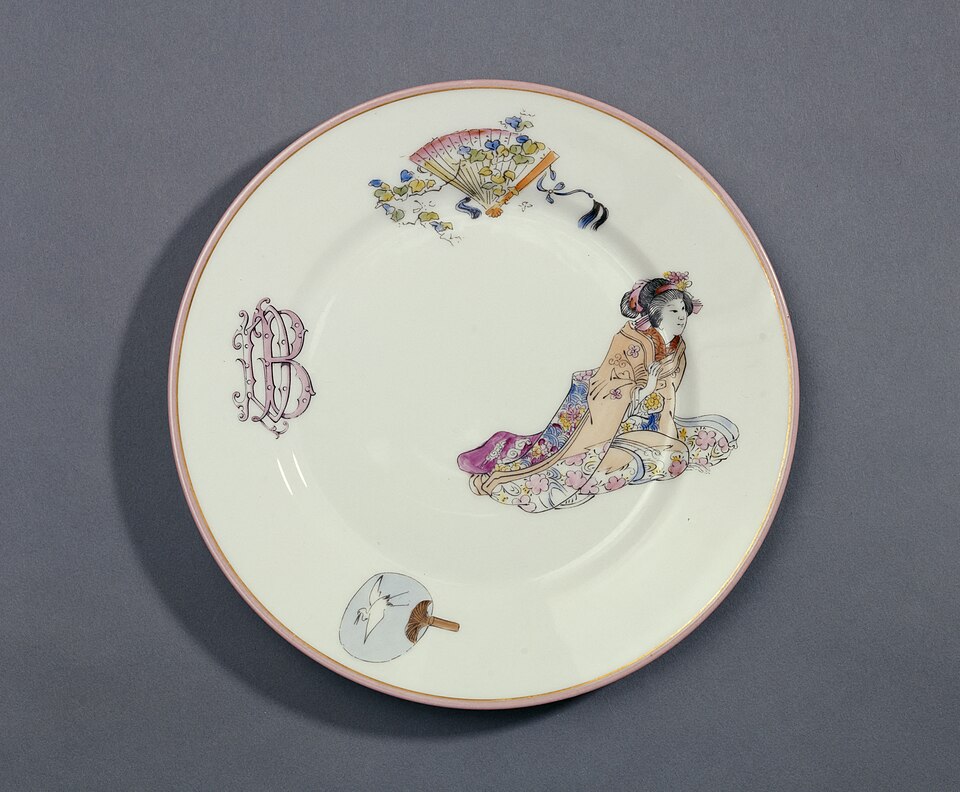
Japonisme (ฌาปงนิสม์) คือกระแสความนิยมศิลปะญี่ปุ่นในโลกตะวันตก โดยเฉพาะในยุโรปช่วงครึ่งหลังของศตวรรษที่ 19 หลังจากที่ญี่ปุ่นเปิดประเทศสู่การค้ากับต่างชาติ
กระแสนี้ส่งผลอย่างมากต่อศิลปะและการออกแบบของยุโรป ไม่ว่าจะเป็นจิตรกรรม แฟชั่น เฟอร์นิเจอร์ รวมถึง เซรามิก ซึ่งได้รับอิทธิพลจากความเรียบง่าย ธรรมชาติ และองค์ประกอบแบบญี่ปุ่น
จุดเริ่มต้นของ Japonisme

Japonisme เกิดขึ้นหลังจากที่ญี่ปุ่นเปิดประเทศในช่วงปี ค.ศ. 1850s–1860s ทำให้สินค้าและศิลปะญี่ปุ่น เช่น ภาพพิมพ์ไม้ (Ukiyo-e) และเครื่องปั้นดินเผา ถูกนำเข้าสู่ยุโรป
ศิลปินและนักออกแบบชาวยุโรปเริ่มสนใจความแตกต่างของศิลปะญี่ปุ่น ซึ่งมีลักษณะเรียบง่าย ไม่ยึดติดกับกฎแบบตะวันตก และเน้นธรรมชาติ
สิ่งนี้ทำให้เกิดการผสมผสานระหว่าง “ศิลปะตะวันตก” กับ “แรงบันดาลใจจากญี่ปุ่น”
อิทธิพลต่อการออกแบบเซรามิก
Japonisme มีอิทธิพลต่อเซรามิกในหลายด้าน ได้แก่:
1. ความเรียบง่ายและพื้นที่ว่าง
เซรามิกแบบญี่ปุ่นมักมีพื้นที่ว่าง (negative space) และไม่ตกแต่งจนเต็มพื้นผิว
นักออกแบบตะวันตกจึงเริ่มลดความซับซ้อนของลวดลายลง
2. แรงบันดาลใจจากธรรมชาติ

ลวดลายที่นิยม เช่น
- ดอกไม้
- นก
- ปลา
- ใบไม้
สะท้อนความสัมพันธ์กับธรรมชาติ ซึ่งเป็นจุดเด่นของศิลปะญี่ปุ่น
3. องค์ประกอบที่ไม่สมมาตร
ต่างจากศิลปะตะวันตกที่เน้นความสมดุล
Japonisme แนะนำแนวคิด “ความไม่สมมาตร” ที่ดูเป็นธรรมชาติและมีชีวิตมากขึ้น
4. เทคนิคและพื้นผิว
มีการทดลองใช้เคลือบแบบใหม่ เช่น
- เคลือบด้าน
- สีธรรมชาติ
- พื้นผิวที่ไม่เรียบ
ซึ่งได้รับแรงบันดาลใจจากเครื่องปั้นดินเผาญี่ปุ่น
เซรามิกในฐานะตัวแทนของการผสมผสานวัฒนธรรม
เซรามิกในยุค Japonisme ไม่ได้เป็นเพียงของใช้หรือของตกแต่ง
แต่เป็นตัวแทนของ “การแลกเปลี่ยนทางวัฒนธรรม” ระหว่างตะวันออกและตะวันตก
นักออกแบบยุโรปนำแนวคิดญี่ปุ่นมาปรับใช้กับรูปแบบตะวันตก
ทำให้เกิดผลงานที่มีเอกลักษณ์ใหม่
อิทธิพลต่อศิลปะสมัยใหม่
Japonisme มีบทบาทสำคัญต่อการพัฒนาศิลปะสมัยใหม่ เช่น
- Art Nouveau
- Modern design

แนวคิดเรื่องความเรียบง่าย ธรรมชาติ และความไม่สมบูรณ์แบบ
ยังคงถูกนำมาใช้ในงานออกแบบเซรามิกในปัจจุบัน
สรุป
Japonisme เป็นกระแสที่ทำให้ศิลปะตะวันตกเปิดรับแนวคิดใหม่จากญี่ปุ่น
ในด้านเซรามิก แนวคิดนี้ช่วยเปลี่ยนจากความซับซ้อนแบบเดิม
ไปสู่ความเรียบง่าย ธรรมชาติ และความมีเอกลักษณ์
ซึ่งยังคงมีอิทธิพลต่อการออกแบบมาจนถึงปัจจุบัน
Read English version
Japonisme (Western Style) and Ceramics

Japonisme refers to the influence of Japanese art and aesthetics on Western art, particularly in Europe during the late 19th century, following Japan’s opening to international trade.
This movement had a significant impact on various forms of art and design, including painting, fashion, furniture, and especially ceramics. Western artists were inspired by the simplicity, natural themes, and unique compositions found in Japanese art.
Origins of Japonisme
Japonisme emerged after Japan opened its borders in the 1850s–1860s, allowing Japanese goods such as woodblock prints (Ukiyo-e) and ceramics to enter European markets.
European artists became fascinated by the differences in Japanese aesthetics, which emphasized simplicity, asymmetry, and a strong connection to nature—contrasting sharply with traditional Western styles.
Influence on Ceramic Design
Japonisme influenced ceramics in several key ways:
1. Simplicity and Negative Space
Japanese ceramics often feature minimal decoration and intentional empty space, leading Western designers to simplify their compositions.
2. Nature-Inspired Motifs
Common motifs include:
- Flowers
- Birds
- Fish
- Leaves
These reflect the importance of nature in Japanese design.
3. Asymmetry
Unlike the symmetrical balance typical of Western design, Japonisme introduced asymmetrical compositions that appear more natural and dynamic.
4. Surface and Glaze Techniques
Western ceramists began experimenting with:
- Matte finishes
- Natural color palettes
- Textured surfaces
Inspired by traditional Japanese pottery.
Ceramics as Cultural Exchange
Ceramics during the Japonisme period represent a fusion of Eastern and Western cultures.
Western designers adopted Japanese principles while maintaining their own forms, resulting in innovative and hybrid designs.
Influence on Modern Design
Japonisme played a key role in shaping modern movements such as:
- Art Nouveau
- Modern design
Its emphasis on simplicity, nature, and organic forms continues to influence contemporary ceramics today.
Conclusion
Japonisme transformed Western ceramics by introducing new perspectives on design, simplicity, and aesthetics.
This cross-cultural influence continues to shape how ceramics are created and appreciated in the modern world.
Leave a Reply