
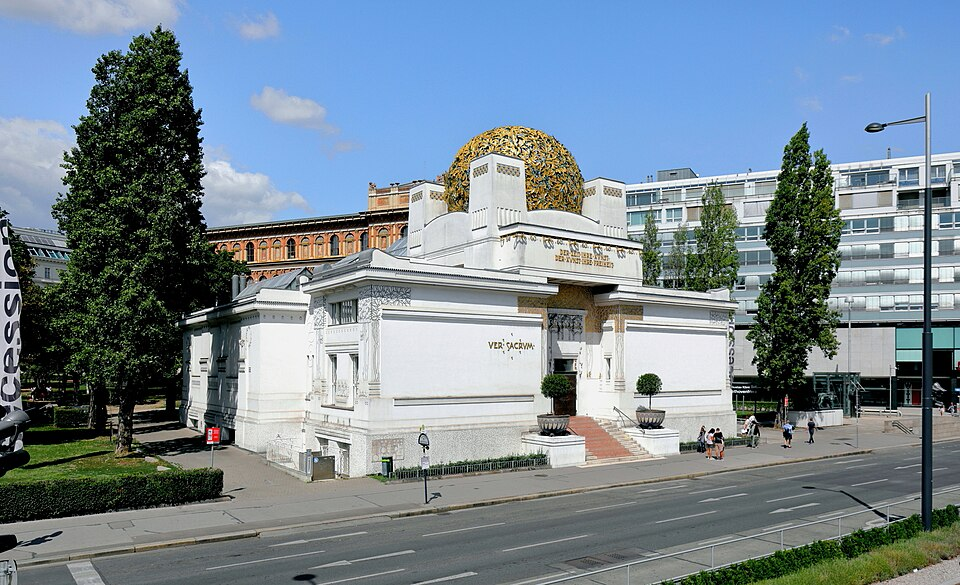
ภาพปก: C.Stadler/Bwag, Wikimedia Commons, CC BY-SA 4.0 (ปรับขนาดภาพ)

Viennese Secession หรือ “เวียนนา เซเซสชัน” เป็นกระแสศิลปะและการออกแบบที่เกิดขึ้นในกรุงเวียนนา ประเทศออสเตรีย ในปี ค.ศ. 1897 โดยกลุ่มศิลปินที่ต้องการแยกตัวออกจากระบบศิลปะแบบดั้งเดิมที่มีความอนุรักษนิยม
แนวคิดสำคัญของกระแสนี้คือการเปิดรับศิลปะสมัยใหม่ เสรีภาพทางความคิด และการผสมผสานศิลปะเข้ากับชีวิตประจำวัน
จุดกำเนิดของ Viennese Secession
ในช่วงปลายศตวรรษที่ 19 ศิลปินออสเตรียจำนวนมากเริ่มไม่พอใจกับระบบศิลปะแบบดั้งเดิมที่ต่อต้านแนวคิดใหม่ ๆ
ศิลปินสำคัญอย่าง Gustav Klimt, Koloman Moser และ Josef Hoffmann จึงร่วมกันก่อตั้ง Viennese Secession เพื่อสนับสนุนศิลปะสมัยใหม่และเปิดพื้นที่ให้กับแนวคิดสร้างสรรค์ใหม่
คำขวัญสำคัญของกลุ่มคือ:
“ทุกยุคสมัยควรมีศิลปะของตนเอง และทุกศิลปะควรมีเสรีภาพ”
ลักษณะเด่นของ Viennese Secession
1. ลวดลายเรขาคณิตและความสมมาตร
Viennese Secession มักใช้รูปทรงเรขาคณิต ความสมมาตร และองค์ประกอบตกแต่งที่มีโครงสร้างชัดเจน แตกต่างจาก Art Nouveau ที่เน้นเส้นโค้ง organic
2. ศิลปะในชีวิตประจำวัน
กลุ่มนี้เชื่อว่าศิลปะไม่ควรอยู่แค่ในพิพิธภัณฑ์ แต่ควรเชื่อมโยงกับเฟอร์นิเจอร์ สถาปัตยกรรม เครื่องแก้ว เซรามิก และของใช้ในชีวิตประจำวัน
3. ความเรียบหรูและ modern aesthetic
งานออกแบบของ Viennese Secession มักมีความเรียบหรู ดูทันสมัย และให้ความสำคัญกับ craftsmanship
Gustav Klimt กับ Viennese Secession
Gustav Klimt ถือเป็นหนึ่งในบุคคลสำคัญที่สุดของ Viennese Secession
ผลงานของเขาโดดเด่นด้วยลวดลายสีทอง ความงามเชิงสัญลักษณ์ และองค์ประกอบตกแต่งที่ละเอียดอ่อน
ผลงานที่มีชื่อเสียงที่สุดคือ The Kiss ซึ่งกลายเป็นหนึ่งในภาพวาดที่มีชื่อเสียงที่สุดของโลก

Viennese Secession กับงานออกแบบและศิลปะตกแต่ง
กระแสนี้ส่งอิทธิพลต่อ:
- เฟอร์นิเจอร์
- เซรามิก
- สิ่งทอ
- Graphic Design
- Interior Design
- สถาปัตยกรรม
ศิลปินให้ความสำคัญกับ craftsmanship ความเรียบหรู และการออกแบบที่เป็นหนึ่งเดียวกัน

อิทธิพลต่อการออกแบบสมัยใหม่
Viennese Secession ส่งอิทธิพลต่อกระแสศิลปะและการออกแบบในยุคต่อมา เช่น:
- Modernism
- Art Deco
- Bauhaus
- Minimal Design
- Contemporary Interior Design
แนวคิดเรื่อง geometry ความเรียบง่าย และ artistic unity ยังคงถูกใช้ในงานออกแบบร่วมสมัยจนถึงปัจจุบัน
สรุป
Viennese Secession ไม่ได้เป็นเพียงกระแสศิลปะ แต่เป็นแนวคิดที่สะท้อนเสรีภาพทางความคิดและความทันสมัยของยุโรปยุคใหม่
ด้วยการผสมผสานศิลปะ งานออกแบบ สถาปัตยกรรม และ craftsmanship เข้าด้วยกัน กระแสนี้จึงกลายเป็นรากฐานสำคัญของการออกแบบสมัยใหม่ทั่วโลก
Read English version
Viennese Secession

The Art Movement That Broke Away from Traditional European Art
The Viennese Secession was an influential art and design movement founded in Vienna, Austria, in 1897 by a group of artists who wanted to break away from conservative academic art institutions.
The movement embraced modern ideas, artistic freedom, and the integration of art into everyday life.
Origins of the Viennese Secession
During the late 19th century, many Austrian artists became frustrated with traditional art institutions that resisted modern artistic approaches.
Artists such as Gustav Klimt, Koloman Moser, and Josef Hoffmann founded the Viennese Secession to promote innovation and international modern art.
Their famous motto was:
“To every age its art, to every art its freedom.”
Characteristics of Viennese Secession
1. Geometric Decoration and Symmetry
Unlike the flowing curves of Art Nouveau, the Viennese Secession often used geometric forms, symmetry, and decorative structures.
2. Art in Everyday Life
The movement believed that art should not exist only in museums, but also in architecture, furniture, ceramics, interiors, and household objects.
3. Elegant Modern Aesthetics
Designs from the movement emphasized elegance, simplicity, craftsmanship, and modern aesthetics.
Gustav Klimt and the Viennese Secession
Gustav Klimt was one of the most important figures of the movement.
His artworks became famous for their gold decoration, symbolism, sensual beauty, and intricate ornamental details.
One of his most iconic works is The Kiss.
Viennese Secession and Decorative Arts
The movement strongly influenced:
- Furniture
- Ceramics
- Textiles
- Graphic Design
- Interior Design
- Architecture
Artists focused on craftsmanship, elegant simplicity, and unified design.
Influence on Modern Design
The Viennese Secession influenced many later movements, including:
- Modernism
- Art Deco
- Bauhaus
- Minimal Design
- Contemporary Interior Design
Its ideas about geometry, simplicity, and artistic unity continue to inspire designers today.
Conclusion
The Viennese Secession was more than an art movement. It represented artistic freedom and the transition toward modern European design.
By combining fine art, decorative design, architecture, and craftsmanship, the movement helped shape the future of modern design worldwide.
Leave a Reply