
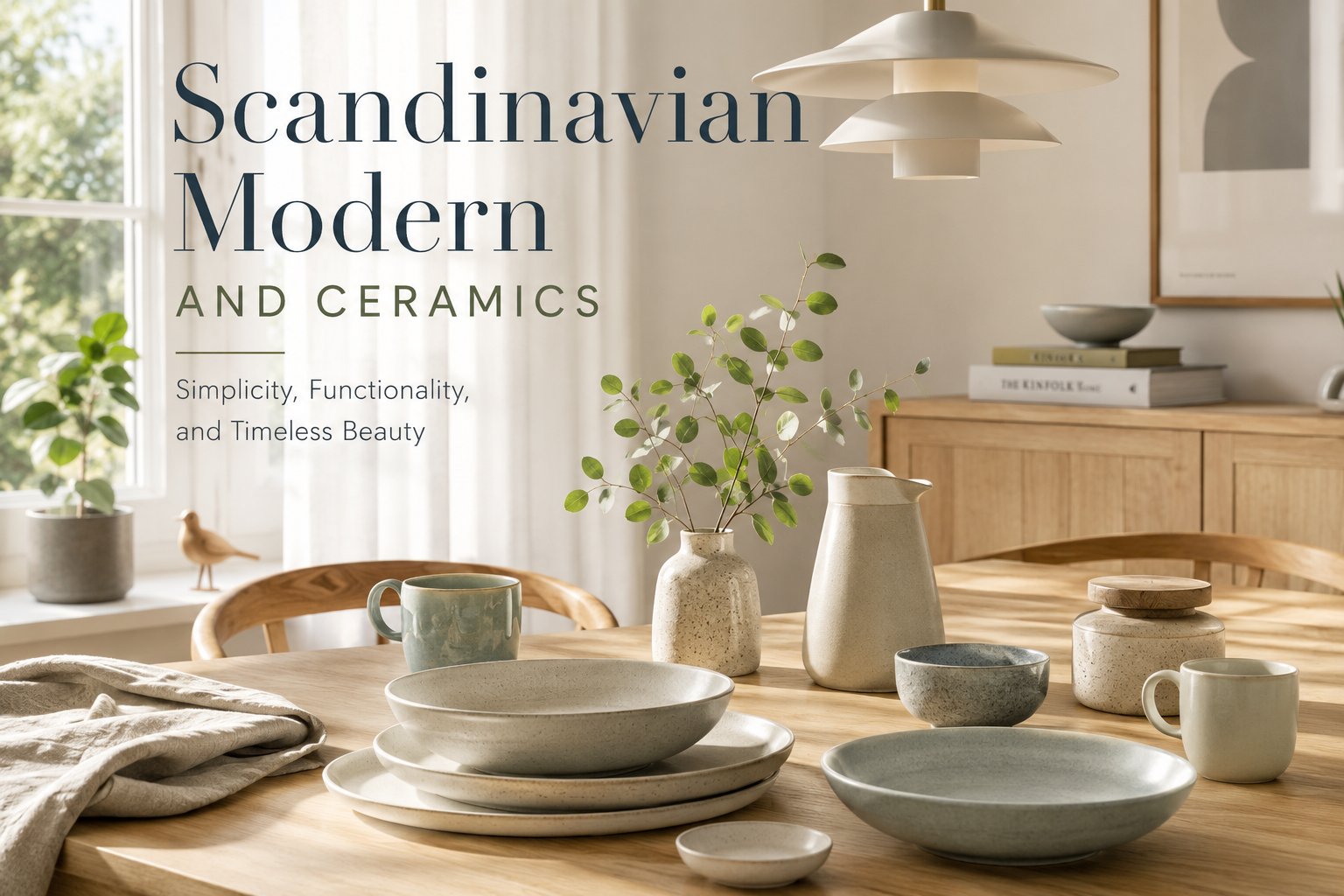
Scandinavian Modern หรือ “สแกนดิเนเวียน โมเดิร์น” เป็นแนวคิดการออกแบบที่เกิดขึ้นในกลุ่มประเทศนอร์ดิก ได้แก่ เดนมาร์ก สวีเดน นอร์เวย์ ฟินแลนด์ และไอซ์แลนด์ โดยได้รับความนิยมอย่างมากตั้งแต่ช่วงทศวรรษ 1930 และเติบโตอย่างรวดเร็วหลังสงครามโลกครั้งที่ 2
สไตล์นี้เน้นการออกแบบที่เรียบง่าย ใช้งานได้จริง และสร้างความอบอุ่นให้กับการใช้ชีวิตประจำวัน ผ่านการเลือกใช้วัสดุธรรมชาติ งานฝีมือคุณภาพสูง และรูปทรงที่สะอาดตา
ในโลกของงานเซรามิก Scandinavian Modern ได้สร้างมาตรฐานใหม่ให้กับเครื่องใช้บนโต๊ะอาหาร แจกัน และของตกแต่งบ้าน โดยผสมผสานความงาม ความเรียบง่าย และการใช้งานเข้าด้วยกันอย่างลงตัว
จุดกำเนิดของ Scandinavian Modern
Scandinavian Modern มีรากฐานมาจากแนวคิดการออกแบบของกลุ่มประเทศนอร์ดิก ที่ให้ความสำคัญกับคุณภาพชีวิต ความเท่าเทียม และการเข้าถึงงานออกแบบที่ดีของทุกคน
หลังสงครามโลกครั้งที่ 2 ความต้องการเฟอร์นิเจอร์และเครื่องใช้ในบ้านเพิ่มสูงขึ้น นักออกแบบจึงพัฒนาผลิตภัณฑ์ที่ผลิตได้ในระดับอุตสาหกรรม แต่ยังคงรักษาคุณภาพของงานฝีมือไว้
แม้จะได้รับอิทธิพลจาก Bauhaus และ Functionalism แต่ Scandinavian Modern มีเอกลักษณ์เฉพาะตัวจากการใช้วัสดุธรรมชาติ สีโทนอ่อน และรูปทรงที่ให้ความรู้สึกอบอุ่นและเป็นมิตร
แนวคิดสำคัญของ Scandinavian Modern
Scandinavian Modern ให้ความสำคัญกับ
Simplicity
ลดองค์ประกอบที่ไม่จำเป็น เหลือเพียงรูปทรงที่สะอาดตาและใช้งานได้จริง
Functionality
ทุกชิ้นงานต้องตอบโจทย์การใช้งานในชีวิตประจำวัน พร้อมมอบความสะดวกสบายแก่ผู้ใช้
Natural Materials
นิยมใช้วัสดุธรรมชาติ เช่น ไม้ เซรามิก แก้ว หนัง และผ้าลินิน เพื่อสร้างบรรยากาศที่อบอุ่น
Craftsmanship
ให้ความสำคัญกับงานฝีมือ รายละเอียด และคุณภาพของการผลิต แม้จะผลิตในระดับอุตสาหกรรมก็ตาม
Human-Centered Design
การออกแบบทุกชิ้นมุ่งเน้นประสบการณ์และความเป็นอยู่ที่ดีของผู้ใช้งาน
ลักษณะเด่นของ Scandinavian Modern
1. รูปทรงเรียบง่าย
เฟอร์นิเจอร์และเซรามิกมักมีเส้นสายที่สะอาดตา ไม่มีการตกแต่งที่ฟุ่มเฟือย
2. เส้นโค้งนุ่มนวล
นิยมใช้เส้นโค้งอ่อนโยนแทนรูปทรงแข็งกระด้าง เพื่อสร้างความรู้สึกเป็นธรรมชาติและผ่อนคลาย
3. สีธรรมชาติ
โทนสีที่พบได้บ่อย ได้แก่
- White
- Cream
- Beige
- Light Gray
- Sage Green
- Soft Blue
- Earth Brown
สีเหล่านี้ช่วยสร้างบรรยากาศที่อบอุ่น สว่าง และสงบ
4. วัสดุจากธรรมชาติ
นิยมใช้
- Oak
- Ash
- Birch
- Walnut
- Stoneware
- Porcelain
- Linen
- Wool
เพื่อสร้างความสมดุลระหว่างความงามและความทนทาน
บุคคลสำคัญของ Scandinavian Modern
Alvar Aalto
สถาปนิกและนักออกแบบชาวฟินแลนด์ ผู้มีชื่อเสียงจากการใช้เส้นโค้งธรรมชาติและวัสดุไม้ในการออกแบบ

Arne Jacobsen
สถาปนิกและนักออกแบบชาวเดนมาร์ก ผู้สร้างผลงานระดับตำนาน เช่น Egg Chair และ Swan Chair ซึ่งผสมผสานความเรียบง่ายเข้ากับความสง่างาม

Hans J. Wegner
นักออกแบบเฟอร์นิเจอร์ผู้สร้างเก้าอี้ Wishbone Chair และ The Chair ซึ่งได้รับการยกย่องว่าเป็นตัวอย่างของงานฝีมือระดับสูง

Kaj Franck
นักออกแบบชาวฟินแลนด์ ผู้มีบทบาทสำคัญในการพัฒนาเครื่องใช้บนโต๊ะอาหารของแบรนด์ Arabia โดยเน้นความเรียบง่ายและการใช้งานจริง

Scandinavian Modern กับสถาปัตยกรรม
สถาปัตยกรรม Scandinavian Modern เน้นความเรียบง่าย เปิดรับแสงธรรมชาติ และเชื่อมโยงกับภูมิทัศน์โดยรอบ

ลักษณะเด่น ได้แก่
- หน้าต่างขนาดใหญ่
- พื้นที่เปิดโล่ง
- สีอ่อน
- การใช้แสงธรรมชาติเป็นองค์ประกอบหลัก
อาคารและบ้านในสไตล์นี้มักให้ความรู้สึกโปร่ง สบาย และอบอุ่น แม้อยู่ในภูมิอากาศที่หนาวเย็น
Scandinavian Modern กับงานออกแบบและเซรามิก
Scandinavian Modern ส่งอิทธิพลต่อ
- Furniture
- Tableware
- Ceramics
- Glassware
- Lighting
- Textiles
งานเซรามิกในยุคนี้ให้ความสำคัญกับความเรียบง่าย ความสมดุล และพื้นผิวที่สะท้อนความงามของวัสดุธรรมชาติ ภาชนะมักมีรูปทรงโค้งมน ใช้งานสะดวก และไม่มีการตกแต่งที่เกินความจำเป็น

สีที่ได้รับความนิยม ได้แก่
- Matte White
- Soft Gray
- Sand Beige
- Moss Green
- Ocean Blue
- Earth Brown
พื้นผิวนิยมใช้เคลือบด้านหรือเคลือบกึ่งด้าน เพื่อคงความรู้สึกเป็นธรรมชาติของเนื้อดิน
อิทธิพลต่อการออกแบบสมัยใหม่
Scandinavian Modern ส่งอิทธิพลต่อหลายสาขา ได้แก่
- Interior Design
- Furniture Design
- Product Design
- Ceramic Design
- Lifestyle Products
- Contemporary Minimalism
แนวคิดเรื่องความเรียบง่าย ความอบอุ่น และการออกแบบเพื่อผู้ใช้งาน ยังคงเป็นแรงบันดาลใจให้กับนักออกแบบทั่วโลก
Scandinavian Modern ในงานเซรามิกร่วมสมัย
นักออกแบบเซรามิกในปัจจุบันยังคงนำแนวคิดของ Scandinavian Modern มาประยุกต์ใช้ โดยเฉพาะการออกแบบที่เน้น
- รูปทรงเรียบง่าย
- สีเอิร์ธโทน
- พื้นผิวเคลือบด้าน
- งานฝีมือที่ละเอียดประณีต
- ความสมดุลระหว่างความสวยงามและการใช้งาน
ผลงานร่วมสมัยจำนวนมากจากแบรนด์อย่าง Arabia, Iittala, Gustavsberg และ Rörstrand ยังคงสะท้อนอิทธิพลของ Scandinavian Modern ได้อย่างชัดเจน
สรุป
Scandinavian Modern เป็นมากกว่าสไตล์การออกแบบ แต่เป็นแนวคิดที่เชื่อว่าความงามควรเกิดจากความเรียบง่าย คุณภาพของวัสดุ และการใช้งานที่ตอบโจทย์ชีวิตประจำวัน
ด้วยการผสมผสานงานฝีมือแบบดั้งเดิมเข้ากับการผลิตสมัยใหม่ Scandinavian Modern ได้สร้างอิทธิพลอย่างลึกซึ้งต่อสถาปัตยกรรม เฟอร์นิเจอร์ และงานเซรามิกทั่วโลก
แม้เวลาจะผ่านมากว่าครึ่งศตวรรษ แต่ความเรียบง่าย ความอบอุ่น และความเหนือกาลเวลาของ Scandinavian Modern ยังคงเป็นแรงบันดาลใจสำคัญของนักออกแบบและผู้รักงานเซรามิกจนถึงปัจจุบัน
Read English version
Scandinavian Modern and Ceramics: Timeless Simplicity Inspired by Nature

Scandinavian Modern is a design movement that originated in the Nordic countries—Denmark, Sweden, Norway, Finland, and Iceland. Emerging in the 1930s and gaining worldwide popularity after World War II, it emphasizes simplicity, functionality, craftsmanship, and a close connection with nature.
Rather than focusing on decoration, Scandinavian Modern celebrates clean lines, natural materials, and designs that improve everyday life. Its philosophy has had a lasting influence on furniture, architecture, interior design, and ceramics, making it one of the most recognizable and enduring design styles in the world.
Today, Scandinavian Modern continues to inspire ceramic artists and designers who value timeless beauty, practical functionality, and handcrafted quality.
The Origins of Scandinavian Modern
Scandinavian Modern developed from the social and cultural values of the Nordic countries, where good design was considered essential for improving everyday life.
Following World War II, there was an increasing demand for affordable, well-designed furniture and household products. Designers sought to create objects that could be mass-produced while maintaining exceptional craftsmanship and quality.
Although influenced by Bauhaus and Functionalism, Scandinavian Modern evolved into a distinctive style characterized by warmth, simplicity, and the use of natural materials.
Core Principles of Scandinavian Modern
Scandinavian Modern is built around several key ideas.
Simplicity
Designs eliminate unnecessary details, leaving only clean forms and essential elements.
Functionality
Every object should serve a practical purpose while remaining beautiful and comfortable to use.
Natural Materials
Wood, ceramics, glass, leather, wool, and linen are widely used to create warm, inviting spaces.
Craftsmanship
Even products designed for industrial production maintain a strong appreciation for skilled craftsmanship and high-quality materials.
Human-Centered Design
Design should improve people’s daily lives by balancing comfort, beauty, and usability.
Characteristics of Scandinavian Modern
1. Clean and Simple Forms
Furniture and ceramic pieces feature minimal decoration, allowing their shape and proportions to become the primary visual focus.
2. Soft Organic Curves
Unlike rigid geometric styles, Scandinavian Modern often incorporates gentle curves that create a warm and welcoming appearance.
3. Natural Color Palette
Common colors include:
- White
- Cream
- Beige
- Light Gray
- Sage Green
- Soft Blue
- Earth Brown
These muted tones create bright, calm, and comfortable interiors.
4. Natural Materials
Scandinavian designers frequently work with:
- Oak
- Ash
- Birch
- Walnut
- Stoneware
- Porcelain
- Linen
- Wool
The combination of natural materials and thoughtful craftsmanship creates products that are both durable and timeless.
Influential Designers
Alvar Aalto
Finnish architect and designer Alvar Aalto became famous for combining organic forms with natural materials, particularly wood. His work helped define Scandinavian Modern architecture and furniture.
Arne Jacobsen
The Danish architect and designer created iconic pieces such as the Egg Chair and Swan Chair, blending Scandinavian simplicity with elegant modernism.
Hans J. Wegner
Known as one of Denmark’s greatest furniture designers, Hans J. Wegner designed classics such as the Wishbone Chair and The Chair, celebrated for their craftsmanship and timeless appeal.
Kaj Franck
Finnish designer Kaj Franck transformed everyday tableware through his work with Arabia. His minimalist approach emphasized functionality and simplicity, making high-quality ceramic design accessible to everyone.
Scandinavian Modern Architecture
Scandinavian Modern architecture emphasizes openness, natural light, and harmony with the surrounding landscape.
Typical characteristics include:
- Large windows
- Open floor plans
- Natural wood finishes
- Neutral color palettes
- Bright, airy interiors
The overall goal is to create spaces that feel warm, comfortable, and connected to nature.
Scandinavian Modern and Ceramics
Scandinavian Modern has significantly influenced:
- Furniture
- Tableware
- Ceramics
- Glassware
- Lighting
- Textiles
Ceramics inspired by this movement emphasize simple silhouettes, balanced proportions, and functional design.
Rather than relying on elaborate decoration, Scandinavian ceramics highlight the beauty of natural clay, subtle textures, and refined craftsmanship.
Popular color palettes include:
- Matte White
- Soft Gray
- Sand Beige
- Moss Green
- Ocean Blue
- Earth Brown
Matte and satin glazes are especially common, enhancing the natural character of the material.
Influence on Contemporary Design
Scandinavian Modern continues to shape many design disciplines, including:
- Interior Design
- Furniture Design
- Product Design
- Ceramic Design
- Lifestyle Products
- Contemporary Minimalism
Its philosophy of simplicity, functionality, and timeless craftsmanship remains one of the strongest influences on modern design.
Scandinavian Modern in Contemporary Ceramics
Many ceramic designers today continue to embrace Scandinavian Modern principles by focusing on:
- Clean, organic forms
- Earth-tone color palettes
- Matte and satin glazes
- High-quality craftsmanship
- A balance between beauty and everyday usability
Contemporary brands such as Arabia, Iittala, Gustavsberg, and Rörstrand continue to reflect the enduring influence of Scandinavian Modern through their elegant and functional ceramic collections.
Conclusion
Scandinavian Modern is more than a design style—it is a philosophy that believes beauty should arise from simplicity, quality materials, and thoughtful functionality.
By combining traditional craftsmanship with modern production techniques, Scandinavian Modern has profoundly influenced architecture, furniture, and ceramic design around the world.
More than seventy years later, its timeless aesthetic, natural warmth, and human-centered approach continue to inspire designers, makers, and ceramic artists across generations.
Leave a Reply