
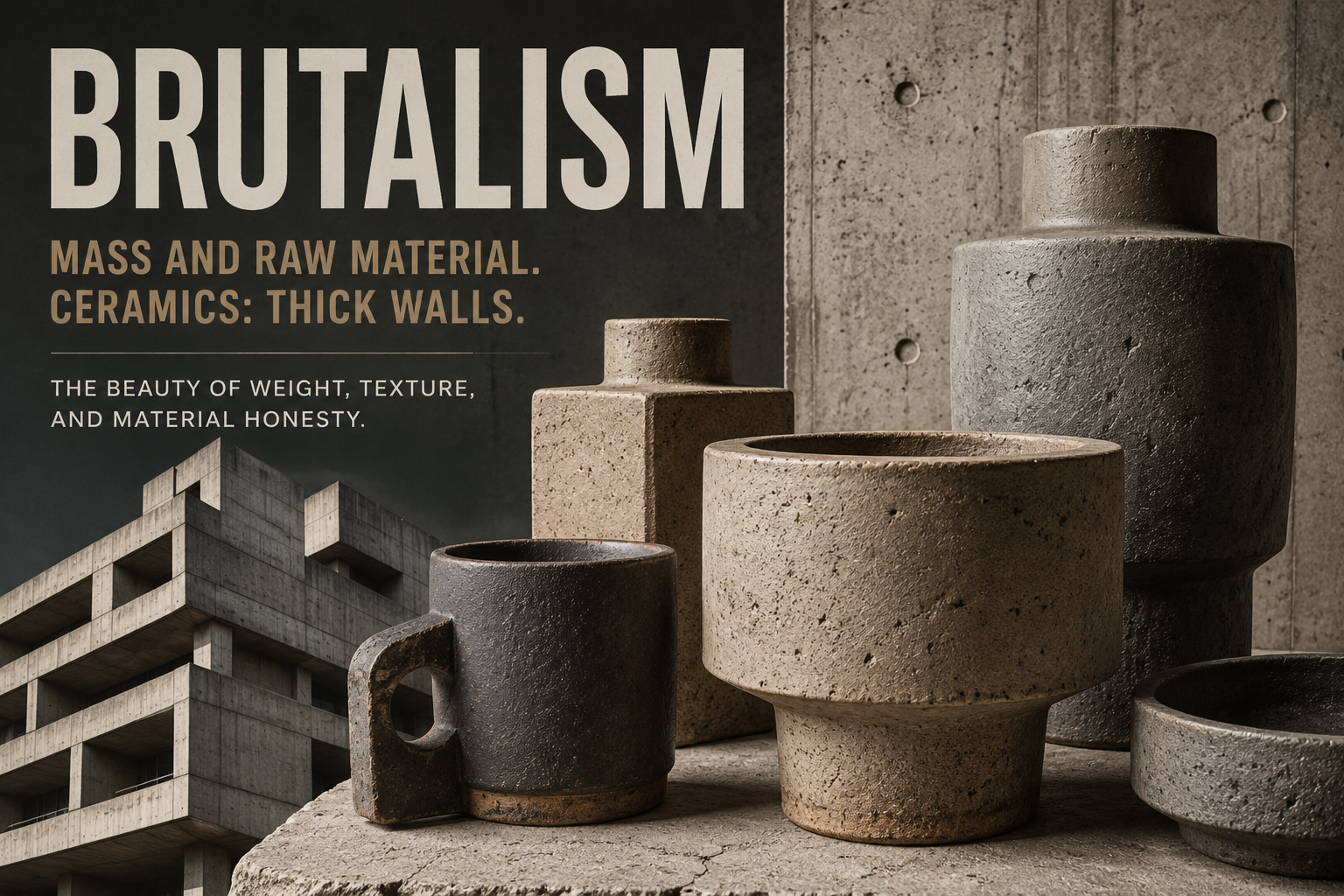
Brutalism หรือ “บรูทัลลิสม์” เป็นแนวทางการออกแบบที่โดดเด่นจากรูปทรงที่หนักแน่น โครงสร้างที่ชัดเจน และการเปิดเผยวัสดุอย่างตรงไปตรงมา โดยไม่พยายามปกปิดพื้นผิวหรือร่องรอยที่เกิดจากกระบวนการสร้าง
แม้ Brutalism จะเป็นที่รู้จักมากที่สุดในโลกของสถาปัตยกรรม โดยเฉพาะอาคารคอนกรีตขนาดใหญ่ แต่แนวคิดเรื่อง Mass, Raw Material และความซื่อตรงต่อวัสดุ ยังสามารถพบได้ในงานเฟอร์นิเจอร์ ประติมากรรม และงานเซรามิกร่วมสมัย
สำหรับงานเซรามิก แนวคิดแบบ Brutalist มักปรากฏผ่าน ผนังภาชนะที่หนา รูปทรงหนักแน่น เนื้อดินที่มองเห็นได้ชัด และพื้นผิวหยาบที่ไม่จำเป็นต้องสมบูรณ์แบบ
จุดกำเนิดของ Brutalism
Brutalism เริ่มพัฒนาขึ้นในช่วงหลังสงครามโลกครั้งที่ 2 และได้รับความนิยมอย่างมากในช่วงประมาณทศวรรษ 1950–1970 โดยเฉพาะในยุโรปและสหราชอาณาจักร
ชื่อ Brutalism มีความเกี่ยวข้องกับคำภาษาฝรั่งเศส Béton Brut ซึ่งหมายถึง “คอนกรีตดิบ” หรือคอนกรีตที่ปล่อยพื้นผิวไว้โดยไม่ปกปิด
สถาปนิกอย่าง Le Corbusier มีบทบาทสำคัญต่อการพัฒนาภาษาการออกแบบนี้ โดยใช้คอนกรีตเปลือยและโครงสร้างขนาดใหญ่เป็นองค์ประกอบสำคัญของอาคาร
ต่อมา สถาปนิกชาวอังกฤษ Alison และ Peter Smithson ได้กลายเป็นบุคคลสำคัญของกระแส New Brutalism ซึ่งให้ความสำคัญกับโครงสร้าง วัสดุ และการแสดงให้เห็นว่าอาคารถูกสร้างขึ้นอย่างไร
แนวคิดสำคัญของ Brutalism
Brutalism ให้ความสำคัญกับแนวคิดหลักหลายประการ
Mass
Mass หรือ “มวล” เป็นหนึ่งในองค์ประกอบที่สำคัญที่สุด
แทนที่จะทำให้วัตถุดูบาง เบา หรือบอบบาง Brutalism มักเน้นรูปทรงขนาดใหญ่ หนา และมีน้ำหนักทางสายตา เพื่อสร้างความรู้สึกมั่นคงและแข็งแรง
Raw Material
Brutalism ให้คุณค่ากับความงามตามธรรมชาติของวัสดุ
คอนกรีตสามารถแสดงรอยแบบหล่อ ไม้สามารถแสดงลายไม้ และในงานเซรามิก เนื้อดิน รอยมือ รอยตัด หรือพื้นผิวที่ไม่เรียบสามารถถูกปล่อยให้มองเห็นได้
Material Honesty
วัสดุไม่จำเป็นต้องถูกทำให้ดูเหมือนสิ่งอื่น
แนวคิดนี้เรียกว่า Material Honesty หรือความซื่อตรงต่อวัสดุ ซึ่งเป็นหัวใจสำคัญของการออกแบบแบบ Brutalist
Function and Structure
โครงสร้างไม่จำเป็นต้องถูกซ่อน แต่สามารถกลายเป็นส่วนหนึ่งของความงามได้
รูปทรงของวัตถุจึงมักสะท้อนวิธีการสร้างและหน้าที่ของมันอย่างตรงไปตรงมา
ลักษณะเด่นของ Brutalism

1. รูปทรงหนักแน่น
งาน Brutalist มักประกอบด้วยรูปทรงขนาดใหญ่และชัดเจน เช่น
- Cube
- Block
- Cylinder
- Monolithic Form
องค์ประกอบเหล่านี้ทำให้งานดูมั่นคง แข็งแรง และมีน้ำหนัก
2. พื้นผิวดิบ
พื้นผิวไม่จำเป็นต้องเรียบหรือสมบูรณ์แบบ
รอยแตกเล็ก ๆ รอยเครื่องมือ รอยนิ้วมือ หรือความไม่สม่ำเสมอของวัสดุสามารถกลายเป็นส่วนหนึ่งของงานออกแบบ
3. การตกแต่งน้อย
Brutalism ไม่ได้เน้นลวดลายตกแต่งจำนวนมาก แต่ให้ รูปทรง โครงสร้าง และพื้นผิวของวัสดุ เป็นตัวสร้างเอกลักษณ์ของงาน
4. สีจากวัสดุธรรมชาติ
โทนสีที่พบได้บ่อย ได้แก่
- Concrete Gray
- Charcoal
- Black
- Off-White
- Sand
- Terracotta
- Earth Brown
สีเหล่านี้ช่วยรักษาความรู้สึกดิบและเป็นธรรมชาติของวัสดุ
Brutalism กับสถาปัตยกรรม

Brutalism สามารถสังเกตได้ง่ายที่สุดจากงานสถาปัตยกรรม
อาคารมักมีลักษณะ เช่น
- โครงสร้างคอนกรีตเปลือย
- รูปทรงขนาดใหญ่
- ผนังหนา
- รูปทรงเรขาคณิตชัดเจน
- การเปิดเผยโครงสร้างของอาคาร
- การตกแต่งที่น้อย
แทนที่จะซ่อนน้ำหนักของอาคาร Brutalism กลับเลือกที่จะ แสดงมวลและน้ำหนักออกมาอย่างชัดเจน
นี่คือแนวคิดที่สามารถเชื่อมโยงกับงานเซรามิกได้โดยตรง
Brutalism กับงานเซรามิก

เมื่อนำแนวคิด Brutalism มาประยุกต์ใช้กับเซรามิก จุดสำคัญไม่ได้อยู่ที่การทำให้เซรามิก “เหมือนอาคารคอนกรีต” แต่เป็นการนำหลักเรื่อง Mass, Material และ Structure มาใช้กับดิน
หนึ่งในลักษณะที่ชัดเจนที่สุดคือ Thick Walls หรือผนังภาชนะที่หนา
แทนที่จะสร้างถ้วยหรือแจกันที่บางและละเอียด งานเซรามิกแนว Brutalist สามารถใช้ผนังหนา ขอบหนา และฐานขนาดใหญ่ เพื่อทำให้วัตถุรู้สึกหนักแน่นและมีมวล
ลักษณะที่พบได้ เช่น
- Thick-walled vessels
- Heavy rims
- Chunky handles
- Block-like forms
- Exposed clay
- Rough textures
- Uneven surfaces
- Minimal glazing
ตัวเนื้อดินจึงไม่ได้เป็นเพียงโครงสร้างที่อยู่ใต้เคลือบ แต่กลายเป็นส่วนสำคัญของงานออกแบบ
Raw Material: เมื่อเนื้อดินกลายเป็นความงาม
งานเซรามิกทั่วไปอาจใช้เคลือบเพื่อปกปิดพื้นผิวของดิน แต่ในงานที่ได้รับอิทธิพลจาก Brutalism นักออกแบบสามารถเลือกเปิดเผยเนื้อวัสดุมากขึ้น
ตัวอย่างเช่น การปล่อย Unglazed Clay บางส่วน การใช้ดินเนื้อหยาบ หรือการใช้เคลือบด้านที่ยังทำให้สัมผัสถึงพื้นผิวของเนื้อดินได้
รอยจากกระบวนการผลิตก็สามารถถูกเก็บไว้ เช่น
รอยมือ รอยขูด รอยตัด รอยต่อ หรือพื้นผิวที่ไม่สมมาตรอย่างสมบูรณ์
แทนที่จะถูกมองว่าเป็นข้อบกพร่อง ร่องรอยเหล่านี้กลับกลายเป็นหลักฐานของ Material และ Making Process
Brutalism ในงานเซรามิกร่วมสมัย
ในงานเซรามิกร่วมสมัย แนวคิดแบบ Brutalist มักถูกนำมาใช้กับ
- Vases
- Sculptural Vessels
- Bowls
- Planters
- Tableware
- Decorative Objects
โดยเฉพาะงานที่มีรูปทรงหนาและเรียบง่าย ใช้ดิน Stoneware หรือดินที่มี Texture ชัดเจน
บางชิ้นอาจใช้เคลือบเพียงด้านใน ขณะที่ด้านนอกปล่อยเนื้อดินไว้ หรือใช้เคลือบด้านที่มีพื้นผิวคล้ายหิน คอนกรีต และแร่ธรรมชาติ
จุดสำคัญจึงไม่ใช่การสร้างความสมบูรณ์แบบ แต่เป็นการสร้างความรู้สึกถึงน้ำหนัก วัสดุ และกระบวนการผลิต
อิทธิพลต่อการออกแบบร่วมสมัย
ปัจจุบันแนวคิด Brutalism ยังคงพบได้ในหลายสาขา เช่น
- Architecture
- Interior Design
- Furniture Design
- Product Design
- Graphic Design
- Ceramic Design
- Contemporary Sculpture
โดยเฉพาะในงานออกแบบร่วมสมัยที่ต้องการหลีกหนีจากความเรียบเนียนและสมบูรณ์แบบของการผลิตแบบอุตสาหกรรม
ความหยาบ ร่องรอยของวัสดุ และความไม่สมบูรณ์แบบจึงกลับกลายเป็นสิ่งที่สร้างเอกลักษณ์ให้กับงาน
สรุป
Brutalism เป็นแนวคิดการออกแบบที่มองเห็นความงามใน มวล โครงสร้าง และความดิบของวัสดุ
เมื่อนำแนวคิดนี้เข้าสู่งานเซรามิก ความงามจึงไม่ได้เกิดจากลวดลายหรือการตกแต่งที่ซับซ้อน แต่เกิดจาก ผนังที่หนา รูปทรงที่หนักแน่น พื้นผิวของดิน และร่องรอยของกระบวนการสร้าง
เซรามิกแบบ Brutalist จึงสามารถดูเรียบง่าย แต่ในขณะเดียวกันก็มีพลังและตัวตนอย่างชัดเจน
เพราะบางครั้ง วัสดุไม่จำเป็นต้องถูกทำให้สมบูรณ์แบบเพื่อให้สวยงาม — เพียงแค่ปล่อยให้วัสดุแสดงตัวตนของมันออกมา ก็สามารถกลายเป็นงานออกแบบได้
Read English version
Brutalism and Ceramics: Mass, Raw Material, and the Beauty of Thick Walls

Brutalism is a design movement known for its bold forms, heavy visual mass, exposed structures, and honest use of raw materials. Rather than hiding construction methods or covering surfaces with decoration, Brutalism allows materials and structure to become part of the design itself.
The movement is most closely associated with architecture, particularly monumental concrete buildings. However, its principles of mass, raw material, structural honesty, and simplicity can also be applied to furniture, sculpture, product design, and contemporary ceramics.
In ceramics, Brutalist ideas often appear through thick walls, heavy rims, substantial forms, exposed clay, rough textures, and minimal decoration. Instead of trying to make an object appear delicate or perfectly refined, Brutalist-inspired ceramics celebrate weight, material, and the physical process of making.
The Origins of Brutalism
Brutalism developed after World War II and became particularly influential from the 1950s through the 1970s.
The term is closely connected to the French expression béton brut, meaning “raw concrete.” It refers to concrete that is intentionally left exposed rather than covered or polished to conceal its natural surface.
The architectural work of Le Corbusier played an important role in developing this approach. His use of exposed concrete demonstrated how construction materials themselves could become an important part of a building’s visual identity.
As Brutalism developed, designers increasingly embraced large geometric forms, visible structures, raw surfaces, and materials shown in their natural state.
These principles eventually extended beyond architecture and became influential in many areas of contemporary design.
Core Principles of Brutalism
Brutalism can be understood through several fundamental ideas.
Mass
Mass is one of the most recognizable characteristics of Brutalist design.
Rather than making objects appear thin, light, or delicate, Brutalism emphasizes volume, weight, and solidity.
Large forms and substantial proportions create a strong visual presence and communicate a sense of permanence.
In ceramics, this idea can be translated into thick vessel walls, wide bases, heavy rims, and bold silhouettes.
Raw Material
Brutalism celebrates materials in their natural or minimally processed state.
Concrete may retain marks from its formwork. Wood may reveal its grain. Metal may show oxidation or fabrication marks.
Similarly, ceramics can reveal the natural qualities of clay rather than completely covering them with glaze.
Texture, variation, and traces of the making process become part of the finished object.
Material Honesty
Another important principle is Material Honesty.
A material does not need to imitate something else in order to appear beautiful.
Clay can look like clay.
Concrete can look like concrete.
Wood can retain its grain and texture.
By allowing materials to express their natural characteristics, the design gains a sense of authenticity and physical presence.
Structure
In Brutalist design, structure is not something that always needs to be hidden.
Construction methods, joints, thickness, and structural elements can become visible parts of the design.
This creates objects that feel direct, purposeful, and visually powerful.
Characteristics of Brutalism
1. Heavy and Solid Forms
Brutalist objects often feature strong geometric or monolithic forms.
Common shapes include:
- Cubes
- Blocks
- Cylinders
- Large geometric volumes
- Monolithic forms
These shapes create a sense of stability, strength, and visual weight.
2. Raw and Textured Surfaces
Perfectly smooth surfaces are not essential to Brutalist design.
Instead, roughness and irregularity can become important visual elements.
Tool marks, scratches, impressions, uneven surfaces, and variations in texture may intentionally remain visible.
These details reveal how an object was made.
3. Minimal Decoration
Brutalism generally avoids unnecessary ornament.
Instead of relying on patterns or decorative details, visual interest comes from:
- Form
- Proportion
- Structure
- Material
- Texture
The material itself becomes the decoration.
4. Natural and Muted Colors
Brutalist design often uses colors inspired by raw materials.
Common tones include:
- Concrete Gray
- Charcoal
- Black
- Off-White
- Sand
- Terracotta
- Earth Brown
These colors reinforce the natural and material-focused character of the style.
Brutalism and Architecture
Architecture provides the clearest expression of Brutalist principles.
Brutalist buildings commonly feature:
- Exposed concrete
- Massive geometric structures
- Thick walls
- Repetitive structural elements
- Minimal ornamentation
- Clearly visible construction systems
Instead of visually reducing the weight of a building, Brutalist architecture often emphasizes it.
Walls appear thick. Structural elements feel substantial. Materials remain visible.
This emphasis on mass and material provides an important connection between Brutalist architecture and ceramic design.
Brutalism and Ceramics
When Brutalist principles are applied to ceramics, the goal is not necessarily to make pottery look like concrete architecture.
Instead, ceramic artists can translate the movement’s ideas of mass, structure, material honesty, and physical presence into clay.
One of the clearest examples is the use of thick walls.
Traditional tableware is often designed to appear light and refined. Brutalist-inspired ceramics may intentionally move in the opposite direction.
A vessel may feature:
- Thick walls
- Heavy rims
- Wide bases
- Chunky handles
- Block-like silhouettes
- Exposed clay
- Rough surfaces
- Minimal glazing
These elements give the object a strong physical and visual presence.
A thick rim, for example, does more than change the construction of a bowl or cup. It changes how the object feels visually and physically, making its weight and material immediately noticeable.
Thick Walls: Making Mass Visible
In Brutalist-inspired ceramics, thickness becomes part of the design language.
Rather than hiding the amount of clay used to construct a vessel, designers can emphasize it through wide rims, deep profiles, substantial bases, and deliberately heavy proportions.
This creates a sense of mass similar to that found in Brutalist architecture.
A thick-walled bowl may appear almost sculptural.
A vase with a broad base can feel grounded and permanent.
A cup with a chunky handle can emphasize physicality rather than delicacy.
The object’s weight becomes part of the experience of using and observing it.
Raw Material: When Clay Becomes the Decoration
In many conventional ceramics, glaze covers most of the clay body.
Brutalist-inspired ceramics can take a different approach by allowing the clay itself to remain visible.
Sections of unglazed clay may contrast with glazed areas. Coarse stoneware bodies may be intentionally exposed. Matte glazes may preserve the tactile character of the surface rather than creating a perfectly smooth finish.
Marks from the making process can also remain visible, including:
- Finger marks
- Cutting marks
- Scratches
- Carved surfaces
- Tool impressions
- Uneven edges
Rather than being treated as imperfections, these traces can become evidence of material and process.
The object communicates how it was made.
Brutalism in Contemporary Ceramics
Today, Brutalist ideas can be found in many forms of contemporary ceramics, including:
- Vases
- Sculptural vessels
- Bowls
- Planters
- Tableware
- Decorative objects
Designers often work with stoneware or heavily textured clay bodies to create objects with a strong material presence.
Some pieces may be glazed only on the interior while leaving the exterior raw. Others use matte, mineral-like glazes that resemble stone, concrete, ash, or natural earth.
Forms are often simple but substantial.
Rather than depending on elaborate patterns, the character of the piece comes from its proportion, thickness, texture, and material.
Influence on Contemporary Design
The principles associated with Brutalism continue to influence many creative disciplines, including:
- Architecture
- Interior Design
- Furniture Design
- Product Design
- Graphic Design
- Ceramic Design
- Contemporary Sculpture
In a world increasingly dominated by perfectly smooth, digitally produced objects, raw materials and visible imperfections offer a strong contrast.
Designers continue to explore surfaces that reveal texture, construction, and traces of human craftsmanship.
This has helped Brutalist ideas find new relevance within contemporary handmade design.
Conclusion
Brutalism finds beauty in mass, structure, raw material, and physical presence.
When these principles are translated into ceramics, beauty does not have to come from elaborate decoration or perfectly refined surfaces.
Instead, it can emerge through thick walls, heavy forms, exposed clay, rough textures, and visible traces of the making process.
Brutalist-inspired ceramics can therefore feel simple yet powerful—objects whose identity comes directly from their material and construction.
Rather than hiding the nature of clay, this approach allows the material to speak for itself.
Sometimes, a material does not need to be perfected to become beautiful. Its weight, texture, imperfections, and natural character can become the design itself.
Leave a Reply